The Marriage Supper Parable - A Cartoon with Sound Effects, Music, and Scripture - A Teaching of Jesus in Matthew 22

(See the PDF file here: https://drive.google.com/file/d/1-l2aOUz80mv-LIyzzPpySegRgZDMaDLT/view?usp=sharing .) The Marriage...

Showing posts with label The Hobbit. Show all posts

Monday, June 17, 2019

Narnia Promotes Paganism and Witchcraft (Part 2 of 2) -- Paganism and Speaking with Familiar Spirits or Spirit Guides


____________________________________


Paganism and Speaking with Familiar Spirits or Spirit Guides 
Is Found in Narnia

Narnia Promotes Paganism and Witchcraft 
(Part 2 of 2)

{Click Here for Part 1 of 2.}

Witchcraft in The Chronicles of Narnia


The Chronicles of Narnia stories are still popular today after their beginning in the 1950s. They have been made into several popular Hollywood films. Many Christians have embraced the books and treasured them along with other writings of C.S. Lewis. But, what is the reason for their continuing popularity? Could it be that they are more than just novels for entertainment?

Narnia Promotes Paganism and Witchcraft (Part 1 of 2) -- Telekinesis, Levitation, Witchcraft and NARNIA


____________________________________

Telekinesis, Levitation, Witchcraft and Narnia

Narnia Promotes Paganism and Witchcraft 
(Part 1 of 2)

{Click Here for Part 2 of 2.}

Witchcraft in The Chronicles of Narnia


The Chronicles of Narnia stories are still popular today after their beginning in the 1950s. They have been made into several popular Hollywood films. Many Christians have embraced the books and treasured them along with other writings of C.S. Lewis. But, what is the reason for their continuing popularity? Could it be that they are more than just novels for entertainment?

Narnia Contradicts the Bible and Is Anti-Christ (Witchcraft in The Chronicles of Narnia)


____________________________________


NARNIA CONTRADICTS
THE BIBLE AND IS ANTI-CHRIST

Witchcraft in The Chronicles of Narnia


The Chronicles of Narnia stories are still popular today after their beginning in the 1950s. They have been made into several popular Hollywood films. Many Christians have embraced the books and treasured them along with other writings of C.S. Lewis. But, what is the reason for their continuing popularity? Could it be that they are more than just novels for entertainment?

The late David J. Meyer, a former witch, became a believer in Jesus Christ and left witchcraft. He then exposed the real witchcraft in some popular books for children and adults. David J. Meyer wrote:

As a former witch, astrologer, and occultist who has been saved by the grace of God, I know that the works of C.S. Lewis are required reading by neophyte witches, especially in the United States and England. This includes The Chronicles of Narnia, because it teaches neophyte, or new witches, the basic mindset of the craft. Isn’t it strange, though, that many “Christian” churches and organizations have used The Chronicles of Narnia as Sunday School curriculum?” [End quote] (Meyer, David J. “The Witchcraft of the Narnia Chronicles.” lasttrumpetministries.org.) (Emphasis added)

{Note: A neophyte is a beginner witch.}

Let’s consider what David J. Meyer said about Narnia.

Wednesday, June 7, 2017

The Lord of the Rings Exposed - The Magic Mirror and the "Palantir" Exposed (SHORT VERSION)


The Lord of the Rings Exposed - The Magic Mirror and the "Palantir" Exposed (SHORT VERSION)


(This is a shorter version of an article I recently wrote. If you want more details, read the longer version here.)

Dear brothers and sisters in Christ, I am writing this article about The Lord of the Rings to encourage you to seek God about this topic -- to seek God about what He wants you to know regarding The Hobbit and The Lord of the Rings books. Are they full of magic that real witches and wizards use, or are they just fantasy stories that are harmless? Is Gandalf, the wizard character, redeemable, or not?

We will focus on two items in this article that you may not be aware of.

The Magic Mirror or Pool of Galadriel


In The Fellowship of the Ring, Galadriel, an elf lady, takes some people to view a magic pool. There, Samwise Gamgee (a hobbit) gazes into the magic pool and magically sees events happening far away (allegedly). Tolkien writes:

“Down a long flight of steps …. At the bottom, ... stood a basin of silver, wide and shallow, and beside it stood a silver ewer.

With water from the stream Galadriel filled the basin to the brim, ... she spoke. `Here is the Mirror of Galadriel,' she said. 'I have brought you here so that you may look in it, if you will.'

.... 'What shall we look for, and what shall we see?' asked Frodo, filled with awe.

`Many things I can command the Mirror to reveal,' she answered, `and to some I can show what they desire to see. But the Mirror will also show things unbidden, … and more profitable than things which we wish to behold. …. For it shows things that were, and things that are, things that yet may be. …. Do you wish to look?'" [A.] [End quote]

The magic pool or mirror of Galadriel is no different that a mirror for divination, or a scrying mirror (or pool). Scrying mirrors are sold online and in witchcraft shops. The practice of gazing into a magic mirror or pool is used for divination, or gaining hidden knowledge. God forbids divination in Deuteronomy 18 and throughout the Bible. God said through Moses: “There shall not be found among you any one that ... or that useth divination,....” (Deuteronomy 18:10).

But, divination is not only practiced and promoted in The Fellowship of the Ring. A crystal ball is used in The Two Towers.

The Crystal Ball (“Palantír” globe)


In The Two Towers, Gandalf obtained a crystal ball (called a “Palantir”) from a wizard’s tower (Isengard), after Gandalf had defeated Saruman, an “evil” wizard. One night, Pippin stole the crystal ball to look into it. The hobbit gazes into its black depths until he sees images appearing. He hears a voice speaking to him, in his mind. It is Sauron, an “evil” wizard, who runs the evil country of Mordor.

Tolkien writes:

The Lord of the Rings Exposed - The Magic Mirror and the "Palantir" Exposed


The Lord of the Rings Exposed - The Magic Mirror and the "Palantir" Exposed


(To read a shorter version of this article, click here.)

Dear brothers and sisters in Christ, I am writing this article about The Lord of the Rings to encourage you to seek God about this topic -- to seek God about what He wants you to know regarding The Hobbit and The Lord of the Rings books. Are they full of magic that real witches and wizards use, or are they just fantasy stories that are harmless? Is Gandalf, the wizard character, redeemable, or not?

We will focus on two items in this article that we will spend a little time looking at. Before we go there, I’d like to show you, briefly, how many times certain important words appear in The Lord of the Rings: The Fellowship of the Ring.

“Magic” appears 18 Times in The Fellowship of the Ring.


The words “Magic”, “Magician,” and “Magical” appear 18 times in The Fellowship of the Ring. “Sorcerer” and “sorcery” each appear once. “Wizard” appears 58 times in the actual text of the story. The word “power” is often found in the context of magical power throughout the book. (I used a word search box on a pdf file to count these words for me.)

The Magic Mirror or Pool of Galadriel


In The Fellowship of the Ring, Galadriel, an elf lady, takes some people to view a magic pool. There, Samwise Gamgee (a hobbit) gazes into the magic pool and magically sees events happening far away (allegedly). Tolkien writes:


“Down a long flight of steps …. At the bottom, upon a low pedestal carved like a branching tree, stood a basin of silver, wide and shallow, and beside it stood a silver ewer.

With water from the stream Galadriel filled the basin to the brim, and breathed on it, and when the water was still again she spoke. `Here is the Mirror of Galadriel,' she said. 'I have brought you here so that you may look in it, if you will.'

Monday, June 5, 2017

Lord of the Rings — The Witchcraft of Lord of the Rings Exposed (and The Hobbit)


Lord of the Rings — The Witchcraft of Lord of the Rings Exposed (and The Hobbit)


What is the reason that so many Christians like The Lord of the Rings and The Hobbit? Why do so many Christians take their children to watch Lord of the Rings movies, and let their older children read the books? 

They might say it is fantasy or pretend. But, is the magic portrayed in these books (and films) just pretend? This article will take you into some scenes from The Hobbit to explore these questions and to reveal truth about these subjects you may not be aware of.

__________________

Popular since the time they were written, The Lord of the Rings and The Hobbit have drawn millions of fans across the globe. They tell the story of Bilbo and Frodo, two hobbits that both set out on magical adventures in the world of Middle Earth. Both had at one time carried a magic ring of power. Both used it to disappear, and hide from danger.

A wizard named Gandalf helped and befriended them. His friendship and influence make these stories what they are. They would not exist without this character. Parents, I write to you, since you have the responsibility to teach your children what is right and true. Children for several decades have been taught ideas and concepts through The Lord of the Rings and The Hobbit.

We need to address these ideas and concepts, removing personal bias and beliefs to see them from the standpoint of truth vs. opinion. We will ask and try to answer the questions: ‘Are The Lord of the Rings and The Hobbit occultic? If so, how?’

In 1937, It All Began


In 1937, J.R.R. Tolkien, author of The Lord of the Rings and its companion The Hobbit, introduced us to a wizard character named Gandalf in his first book featuring Gandalf — The Hobbit. Tolkien introduces us to this benevolent wizard in this way:

“All that the unsuspecting Bilbo saw that morning was an old man with a staff. He had a tall pointed blue hat, a long grey cloak, a silver scarf over which his long white beard hung down below his waist, and immense black
Boots.” [1]

When Galdalf meets Bilbo Baggins, we read:

“Yes, yes, my dear sir—and I do know your name, Mr. Bilbo Baggins. And you do know my name, .... I am Gandalf, …. ”

“Gandalf, Gandalf! … Not the wandering wizard that gave Old Took a pair of magic diamond studs that fastened themselves and never came undone till ordered? Not the fellow who used to tell such
wonderful tales at parties, about dragons and goblins ...?” [1]

We to look at something deeper. In this short portion of the book, we learn that magic was used to fasten diamond studs. They were only unfastened by speaking a word, a command. That spoken word is a magic spell. This story was originally written for children. What kind of messages does J.R.R. Tolkien’s books bring to children? Are Lord of the Rings and The Hobbit innocent fantasy, or do they teach harmful ideas? We will address these questions in this article.

The Number of Times Certain Words Appear in The Hobbit


In The Hobbit (according to a word search box), the word “wizard” appears 69 times. The word “magic” appears 34 times. “Wand” or “staff” (i.e. magic wand / staff) together appear 10 times. “Spell” (as in a magic spell) can be found in 6 different places. The phrases “magic ring,” “the ring,” “a ring of power,” “his ring,” and “a ring” (i.e. in the context of the magic ring) together appear about 37 times (in the text of Tolkien’s book).

Bilbo Baggins Finds the Ring.


Saturday, June 3, 2017

The Occult in Narnia, Part 6 - The Magician's Nephew Promotes the Occult

The Occult in Narnia, Part 6 - The Magician's Nephew Promotes the Occult


The story called The Magician's Nephew was set by C.S. Lewis to be the first book in The Chronicles of Narnia, even though he wrote it some years after The Lion, the Witch, and the Wardrobe. This story has a boy named Digory and a girl named Polly travelling to alternate universes by way of magic rings -- rings that his uncle Andrew obtained. Andrew Ketterley, a sorcerer (magician), offered a yellow, magic ring to Polly, Digory's neighbor girl. She vanished into thin air and arrived at another world, in an alternate universe. 

Seeing a greedy look flash on his uncle's face, Digory had warned Polly not to touch the yellow rings, which were in a tray. C.S. Lewis wrote:

"Polly! Don't be a fool!" he shouted. "Don't touch them."


It was too late. Exactly as he spoke, Polly's hand went out to touch one of the rings. And immediately, without a flash or a noise or a warning of any sort, there was no Polly. Digory and his Uncle were alone in the room." [1]

Let's stop here and address something that should be concerning to every parent. Magic rings that cause people to disappear are fictional. But, magic rings that can "control" an occult "force" are real. 

The Force and Witchcraft


The late David J. Meyer, a former witch, who left witchcraft and became a born-again Christian, wrote some articles exposing the occult in some popular books and films. Meyer explained what magic rings were used for by real witches:

"The first thing a neophyte or beginner witch is taught is that there is a “force.” The “force” has two sides and can be controlled by magic spells, words, potions, incantations, rope magic, rings, amulets, and so on. Witches believe that there is good witchcraft and bad witchcraft, and the good always triumphs over evil! Witches also teach that battles are fought in the Middle Earth and in the astral plane causing upheavals both above and below. Thus, witches emphasize that good must triumph over evil, but it is all witchcraft." [2] (emphasis added) 

Witches control the "force" by way of many items, including rings. Many movies and books, including Star Wars and Lord of the Rings, are very occultic. Using a ring to work magic is what witches do today. This is not a fictional concept. It is reality. The Bible forbids magic and the occult in Deuteronomy 18 and elsewhere.


The Magic Ring


Moving on, we will now look at how young Digory treated his uncle after Polly magically vanished from touching a ring. Keep in mind that Narnia was written by a man who claimed to be a Christian. Digory confronts his uncle about sending Polly to an alternate universe. C.S. Lewis writes:

[Andrew said:] "...The whole point of sending anyone into the Other Place is that I want to find out what it's like."

"Well why didn't you go yourself then?"

"Digory had hardly ever seen anyone look so surprised and offended as his Uncle did at this simple question. "Me? Me?" he exclaimed. "The boy must be mad! A man at my time of life, and in my state of health, to risk the shock and the dangers of being flung suddenly into a different universe? ... Do you realise what you're saying? Think what Another World means—you might meet anything—anything."


"And I suppose you've sent Polly into it then," said Digory. His cheeks were flaming with anger now. "And all I can say," he added, "even if you are my Uncle—is that you've behaved like a coward, sending a girl to a place you're afraid to go to yourself."


"Silence, Sir!" said Uncle Andrew, bringing his hand down on the table. "I will not be talked to like that by a little, dirty, schoolboy. You don't understand. I am the great scholar, the magician, the adept, who is doing the experiment. Of course I need subjects to do it on. ... No great wisdom can be reached without sacrifice. But the idea of my going myself is ridiculous. It's like asking a general to fight as a common soldier. Supposing I got killed, what would become of my life's work?"


"Oh, do stop jawing," said Digory. "Are you going to bring Polly back?" [End quote] [1]

Notice how Digory treats his uncle. Is this book teaching children to respect others, especially their elders? Besides having this boy character not showing respect to adults, and giving him a bad attitude toward his uncle, C.S. Lewis is doing something else with this character. Digory represents children that do not like the idea of magic. In the story, Digory actually didn't believe magic existed, until he saw it with his own eyes. After he saw Polly vanish, and after some heated dialogue with his uncle, Digory said:

".... I didn't believe in Magic till to-day. I see now it's real. Well if it is, I suppose all the old fairy tales are more or less true. ..." [1]

In The Lion, the Witch, and the Wardrobe, Digory is the professor that Lucy and her siblings are staying with. He has a magic wardrobe that sends Lucy and her friends to Narnia. He went from being a skeptical child to believer in magic.

In The Voyage of the Dawn Treader, Eustace Clarence was presented to the reader as unlikable and stuck-up. He scoffed at the idea of magic being real. After his magical adventures in Narnia, Eustace was said to have "improved." C.S. Lewis writes: "...back in our own world everyone soon started saying how Eustace had improved, and how "You'd never know him for the same boy..."

Lewis makes the boy characters that are skeptical or uninterested in magic look unhappy and unlikable. Children that don't believe in magic are being slowly shaped by the Narnia books to believe that magic is actually real, or something that could be real. An appetite for a magical realm is what draws children into more and more overtly occultic fantasy. 


The Astral Plane


In witchcraft, the 'astral plane' is a hypothetical realm where spirits live and where other worlds are thought to exist. There are many views about what exists in this occultic concept of the supernatural world. Some believe there are planets populated by 'astral' beings. People that practice witchcraft and eastern meditation have said they travel to such worlds frequently. This practice is forbidden in the Bible, in Deuteronomy 18. 

It is a type of divination. Merriam-Webster defines divination as: "the art or practice that seeks to foresee or foretell future events or discover hidden knowledge usually by the interpretation of omens or by the aid of supernatural powers" [4]. Discovering "hidden knowledge" happens as a sorcerer supposedly 'travels on the astral plane.' When Lucy goes to Narnia, or Digory and Polly travel to the land of Charn, children are being taught that astral travel is 'good.' For, indeed, what they are really doing is astral travel

Deuteronomy 18:10-11 says: "[10] There shall not be found among you any one that maketh his son or his daughter to pass through the fire, or that useth divination, or an observer of times, or an enchanter, or a witch, [11] Or a charmer, or a consulter with familiar spirits, or a wizard, or a necromancer."

Aslan Promotes Magic


Aslan, the lion, who Lewis called a "supposal" of Christ [3], is also reinforcing in children's minds that magic is "neutral," and can be used for either "good" or "bad." C.S. Lewis writes:

Friday, June 2, 2017

The Occult in Narnia, Part 4 - The White Witch and The Magician's Nephew


The Occult in Narnia, Part 4 - The White Witch and The Magician's Nephew


In this article we will look at the White Witch (Jadis) from The Chronicles of Narnia, by C.S. Lewis. We will show you some information about her that will alarm you (likely) and will open a door to C.S. Lewis' belief system.

One of the main characters in The Chronicles of Narnia is the White Witch, known as Jadis, who was a queen and a sorceress who came from a magical world known as Charn. In The Magician's Nephew, some decades before the events in The Lion the Witch and the Wardrobe took place, a boy named Digory (who grew up to be Professor Digory) and a girl named Polly used magic rings to travel to a magical world called Charn


Jadis, the White Witch


The two magically appeared in a courtyard of a stone building. Entering the building, they found a room in which were many well-dressed people that were motionless as statues, due to a magic spell cast on them years ago. The two children noticed a gold bell and an inscription beside it. C.S. Lewis writes:

Friday, December 12, 2014

The Witchcraft of The Chronicles of Narnia


The Witchcraft of The Chronicles of Narnia

(Photo: The Lion, the Witch, and the Wardrobe.
Click for source.)

Centaurs, dryads, nymphs, fauns, and mythical creatures fill the world of Narnia. C.S. Lewis, the author of the popular book series, was fascinated with Greek mythology, paganism, and ancient England. His stories have had wide acclaim by many around the world and the recent Disney “Narnia” movies have brought in over $1.5 billion at the box office worldwide (1, see Works Cited below).

This article will look at The Chronicles of Narnia’s powerful occult presentation and will reveal truth about its author that most people do not know. We will see that Narnia presents real witchcraft to kids as something “appealing.”


C.S. Lewis and Magic


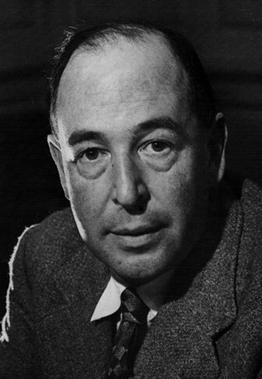
Narnia’s author, C.S. Lewis is a man with two faces. He was born on November 29, 1898 in Belfast, Northern Ireland (2). In the mid-1920s, Lewis joined a group of “intellectuals” called the “Inklings” of which J.R.R. Tolkien was a member. Lewis and Tolkien became good friends (2). During this time, Tolkien got Lewis interested in Catholicism and Lewis began to call himself a “Christian”.

As an alleged “Christian”, Lewis studied and embraced paganism. C.S. Lewis went on a trip to Greece with his wife, Joy. C.S. Lewis wrote:

"I had some ado to prevent Joy and myself from relapsing into Paganism in Attica! At Daphni it was hard not to pray to Apollo the Healer. But somehow one didn’t feel it would have been very wrong — would have only been addressing Christ sub specie Apollonius. We witnessed a beautiful Christian village ceremony in Rhodes and hardly felt a discrepancy." (3 and 4 in Works Cited) (bold / underline added)

Apollo and Jesus Christ are not similar in any way. Lewis was treating them as if they were identical or similar. Apollo was the pagan sun-god of Greece. He was said to ride a fiery chariot through the heavens. Sun-worship has been a part of pagan cultures for thousands of years and it is an abomination to God.

Exodus 20:1-3
1 And God spake all these words, saying,
2 I am the Lord thy God, which have brought thee out of the land of Egypt, out of the house of bondage.
3 Thou shalt have no other gods before me.

Worship of anything (or anyone) other than God is idolatry and God hates it. God must be the focus of a true Christian. Sports, hobbies, work, family, etc. should never be the first thing on a true Christian’s mind when he / she wakes up or the last thing when he / she goes to bed. Jesus Christ should be a Christian’s focus.


C.S. Lewis and the Occult


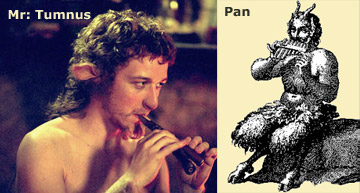
(Photo: Pan is a pagan god of drunkenness and immorality. Source.)
Sadly, many Christians do not understand the danger of how a book series of a “Christian” author could be bad. That is why I feel the need to write this article. I am not trying to attack C.S. Lewis. This article is to encourage Christians to seek God and to seek to know what God shows them about C.S. Lewis and The Chronicles of Narnia.

The Chronicles of Narnia begins in WW2 during the bombing of London. Four Pevensie kids, Lucy, Edmund, Peter, and Susan are sent to stay with Professor Digory Kirke during the war. In this first book, Lucy steps through a magic wardrobe and arrives in a mystical world called “Narnia”. She meets a faun (half man-half goat) called Mr. Tumnus. 
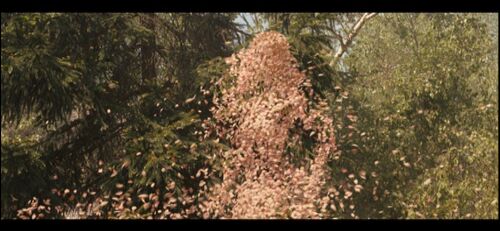
(A dryad from one of the Narnia movies. Source.)

In this magical world, animals can talk, pagan deities called river gods, nymphs, and dryads live in the rivers and in the trees. Mythical creatures including satyrs (similar to fauns), centaurs, merpeople (mermaid), minotaurs, ogres, unicorns, gouls, a phoenix, half-breed (half man-half driad), naiads, etc. populated Narnia (7). All these creatures come from paganism.

(Photo: A phoenix rising. Source.)
One of these mythical creatures, the phoenix (which can be found in an apple orchard in The Magician's Nephew) is a mythical bird which Freemasonry and occultists use as a universal symbol. Manly P. Hall, who was an occultist and a 33rd degree Freemason, wrote: