"An engineer, a mathematician, and a computer programmer are driving down the road when the car they are in gets a flat tire. The engineer says that they should buy a new car. The mathematician says they should sell the old tire and buy a new one. The computer programmer says they should drive the car around the block and see if the tire fixes itself." ~Anvari.org
We have entered the second decade of the twenty-first century. Today, affordable smart phones are widespread, computer game graphics look almost life-like, computer animation is almost indistinguishable from actual footage, remote-controlled drones patrol the skies, and Google maps provide street views of practically any city on Earth. What’s more, every year, the storage capacity of the average computer hard drive increases along with the computing power. We are living on the threshold of what could be a highly advanced future.
Micro-Computers and Nanotechnology

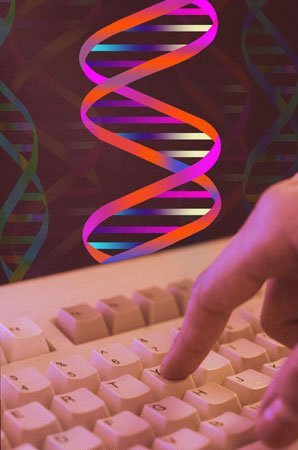
Another kind of micro-computer is in the process of being developed. Unlike Sylvester and Blaauw’s micro-computer, this one would use DNA for its electrical components. At the Hebrew University of Jerusalem a team of scientists has created the first DNA logic gates (3). Like their non-biological counterparts, the DNA logic gates represent one of two possible states, such as the zeros or ones of binary code (3). When one of two inputs was present at a DNA logic gate, the gate fluoresced, giving off light. And, when both of the two inputs or neither were present, the gate ceased fluorescing. This is similar to how a computer logic gate works. The DNA logic gates, when connected together and injected under the skin, may be able to form a biological-based computing system that can detect, diagnose, and treat common sicknesses or medical conditions (3).

Speaking of computers, a fairly new technology field has been gaining ground in recent years. Ever since Don Eigler of IBM spelled out “IBM” with 35 individual xenon atoms in 1989 (13), nanotechnology has been making many breakthroughs. Unlike most technology, which is easily visible to the unaided eye, nanotechnology deals with components much smaller than the head of a pin. Instead of being measured in meters, these components are measured in nanometers. To get a picture of how small this is, a billion nanometers can fit in one meter. Some examples of nanotechnology already in use would include carbon nanotubes (made out of billions of individual carbon atoms). These are currently being used to give extra strength to mountain bikes, golf club, and other high-end sporting equipment (7). Because they are composed entirely of carbon atoms, carbon nanotubes are used in water purification systems. Carbon, which is found in filters and diamonds, is good at attracting impurities and has a strong bonding arrangement.
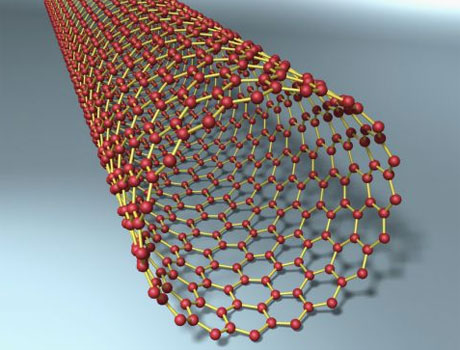 |
| Carbon Nanotube |
Nanotechnology also has great promise for the future of medicine. One application of nanotechnology to the medical field is through the use of nanobots--microscopic machines made out of molecules--for fighting infection. Researchers at the Southwest UK Paediatric Burns Centre at Frenchay Hospital in Bristol have teamed up with scientists at the University of Bath to develop a “dressing” that kills pathogens (such as bacteria) by releasing antibiotics from “nanocapsules” (12). The harmful bacteria produce toxins which eat through the “nanocapsules”, releasing antibiotics (12). If this is perfected, the way doctors treat diseases may change. A patient may find that all he or she needs to do to recover from an illness is to simply swallow a pill: a pill filled with “nanocapsules”. Some other possibilities for nanotechnology in medicine might include nanobots for repairing damaged cells, nanobots for accelerating bone repair, and nanobots for killing cancer cells (14). Yes, you read it correctly, nanotechnology is thought to be a possible cure for cancer.
Bionics
Bionics
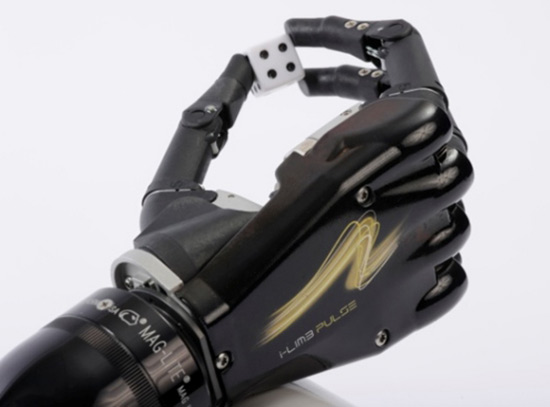 |
| The i-LIMB |
Nanotechnology also has another application in the developing area of medical technology called bionics. Imagine that you lose both your hands. Now, you are unable to work or do a lot of the things you enjoy. But, there is no need to worry. All you have to do is purchase an i-LIMB and have it installed. It sounds like it could be something made by Apple along the same lines of an iphone or ipod, but the i-LIMB is not another phone or portable computer. It is a prosthetic, robotic hand, created by Touch Bionics, that allows users to pick up a variety of objects, including glasses, playing cards, and suitcases. It works by detecting tiny electrical signals from arm muscles to control the movements of its individual, robotic fingers, wrist, and thumb (11). Bionic legs that work in a similar way to the i-LIMB are also on the market.

