Millions of people around the world use them every day. Nearly every company and many jobs depend on it. Cars, ipods, cell phones, cruise ships, satellites, and many other gadgets would not work without it. Practically anything electronic that is in use today uses it. Computers have changed the way we live, and, now, most of us wouldn’t know what to do without them. These electronic computing machines have advanced a lot since their beginning in the 1940s. At that time, one computer filled up a room and had a small fraction of the computing power of an iphone. Yes, computers have come quite far from their humble origins, but if computers in the future improve as researchers say they will, the improvements since the 1940s will be nothing in comparison. The developments and concepts for the future of computer technology are really quite amazing. Before we look at the future of computers, let’s take a quick glimpse at the past.
In 1938, Konrad Zuse invents the Z1 Computer. This primitive machine is an early binary digital computer. Unlike later computers, his invention was not capable of memory storage. The United States military created the ENIAC (Electronic Numerical Integrator and Computer) in 1945 (4). This early computer, like modern computers, could store and save data. A few decades later, in 1970, the first RAM (random-access memory) chip and the first microprocessor, the Intel 4004, came into existence, replacing vacuum-tube technology (4). A year earlier, the military developed a network that would be the origin of the internet: ARPANET. ARPANET is an acronym for Advanced Research Projects Agency Network. It was a network of computers meant to share the burden of computing so that one computer, with the help of a few others in the network, could perform its computations faster (12). It is also thought to be a network for preserving information in case of a nuclear attack.

Twenty-two years later, in 1991, the World Wide Web was available to the public (4). According to James Coates of the Chicago Tribune, during the “Great Holiday Blowout of 1995,…more people bought personal computers than ever in history” (3). During the ‘90s computers became more commonplace and websites multiplied in number.

Since the internet boom of the ‘90s, computers able to access the internet have shrunk so small that they can easily fit in a pocket. The iphone and other smartphones can access the internet, snap and save pictures, record video, and perform most of the functions of a desktop computer. The invention of touch-sensitive screens was also a big improvement and was necessary for smart phones. The smart-phone market has seen even the search engine company, Google, adding their own phone, the Nexus One.

Google’s CEO, Eric Schmidt, has some interesting opinions about the future of computing. He believes that a computer 50 years from now will have a “computational capability that is just so free and so amazing that people will assume that it is an assistant. It knows who you are, it knows what you do, it makes suggestions, it intuits things for you” (1). In a similar way that the Google search engine makes suggestions when you start to enter a search phrase, the computers of the future will be able to accurately guess what you want and will provide you with suggestions. Schmidt also believes that computers of the future will be much faster than today.
Computer processing speed today is limited by the speed of electrons moving through metal and electronic components. Research into a new type of computer circuit is being made by Queen’s University Belfast and Imperial College London (13). Like modern circuits, the new circuit would also use metal, but on a much smaller scale than what is achieved today. The components being developed are more than 100 times smaller than the width of a human hair (13) and consist of arrangements of metal structures which interact with light in a unique way. The researchers call the tiny components “nanoplasmonic devices” (13). Instead of electrons passing through the tiny circuits, light particles (photons) would transmit data at lightning speeds. The team is developing nanoscale waveguides to direct light along a desired route and nanoscale light detectors to detect the light signals (13). The belief is that computers in the future may run at much higher speeds, allowing for greater processing power and a much smaller size.

Having high-speed and smaller components are not the only goals for future computers. Some believe that components of the human body, such as neurons and DNA, can one day be used to advance computer technology to a new level. Researchers from I.B.M. and four universities are currently working on a project to create a computer that mimics the brain. The four universities--Cornell University; the University of California, Merced; Columbia University; and the University of Wisconsin--and I.B.M. started the project in 2008 (8). A large and complex project with a broad goal to use the brain as an inspiration for a computer, the project, over time, began to focus on developing a computer that somewhat resembled the brain in its structure.
Unlike modern computers, the brain is made of billions of neurons, synapses, and complex pathways. The synapses act as data storage centers and link the neurons to each other. Electrical impulses rapidly pass through the axons--cores of the neurons--and get stored and transmitted by the synapses. In a computer, the data storage center is separate from the processor (8). A communications channel, a bus, links the two together (8).

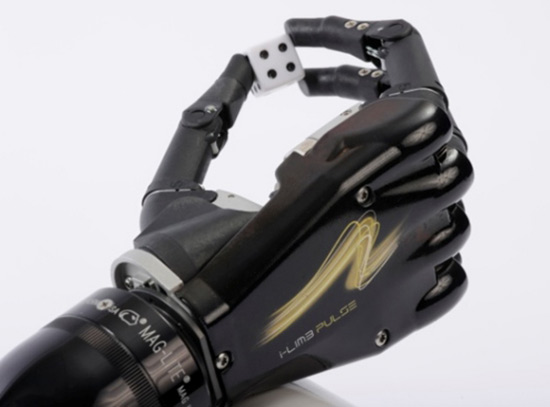
The team from the four universities and I.B.M. has developed a “neuromorphic” computer chip that attempts to copy the structure of the brain (8). It contains 256 neuron-like nodes connected to 262,000 data storage modules resembling synapses (8). When connected to a computer, the chip allows it to recognize numbers written by a person. The computer connected to the chip has also learned how to play Pong, a primitive computer game. The computer is still in the developmental stages, but its future applications are numerous. According to scientists on the team, neuromorphic computers could guide robots through battlefields and allow robots to be trained instead of just programmed; neuromorphic computers in health-care monitors could alert nursing-home staff when a resident is sick; and neuromorphic computers could provide sight to blind people through a high-tech prosthetic eye (8). Even if these concepts become realities, scientists admit that neuromorphic computers will not be able to exactly resemble the structure or functioning of the human brain. The brain is an organ we still do not fully understand. Copying it exactly would be impossible.

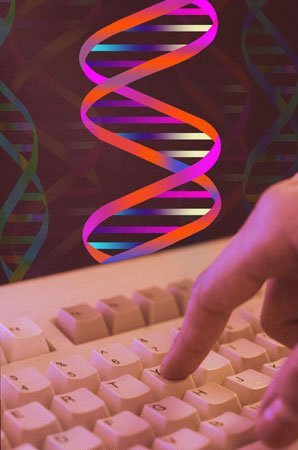
Another interesting idea for the future of computing that relies on components of the human body is being pursued by Jian-Jun Shu at the Nanyang Technical University in Singapore. Shu’s idea is that computers may one day be based on DNA. One problem with modern computer circuits is that as computer components get smaller, they tend to heat up faster. Another problem is that the binary system--zeros and ones--used by all computers today has limits when computers are trying to solve highly complex equations. Shu told PhysOrg.com that, “With DNA-based computing, you can do more than have ones and zeroes. DNA is made up of A, G, C, T, which gives it more range. DNA-based computing has the potential to deal with fuzzy data, going beyond digital data” (10).
Shu and his students are able to manipulate DNA strands by combining or splitting them. The DNA strands will, according to Shu’s model, store information which can then be retrieved and used for computation. Shu explained to PhysOrg.com that, “We can join strands together, creating an addition operation, or we can divide by making the DNA smaller by denaturization. We expect that more complex operations can be done as well” (10). At this point in time, DNA computers are just a concept, without any real prototype. One day, DNA, the very substance that controls how we look and how we grow, might be used to speed up computers. The range of applications of such DNA computers really is beyond what we can perceive right now. The processing power of such a computer would be tremendous.
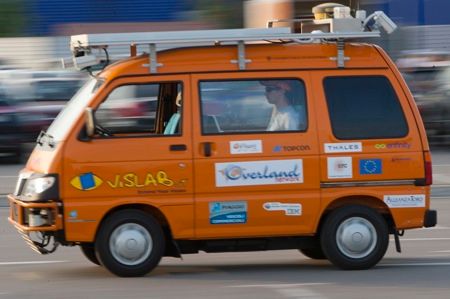
While the full range of the applications for DNA and neuromorphic computers is really beyond our full comprehension right now, the applications for our current technology are starting to be realized. The first long-distance test drive of autonomous, or self-driving, vehicles was done in 2010 during the VisLab Intercontinental Autonomous Challenge (5). A number of vans, equipped with a sophisticated array of equipment, drove from Italy to China with little human intervention, for the 2010 World Fair in Shanghai (5). That same year, Google rolled out its own fleet of autonomous vehicles.
Now, imagine for a moment that you are driving through California, down Highway 1. You look to your left and see a grey Toyota Prius with a strange device mounted to the roof. Two people are inside, but the guy sitting in driver’s seat doesn’t appear to be driving. His hands are resting on his lap, but the car is staying perfectly in its own lane. You’ve seen one of Google’s seven autonomous test cars. As if to prove that it was not only limited to the search engine and software business, Google has launched its own fleet of self-driving cars.

Google’s Toyota Priuses are each equipped with a high tech array of sensors, processors, and cameras (9). A device call a lidar, attached to the top of the experimental car, records a detailed map of the surroundings. Hanging from the car ceiling and aimed toward the front of the car, through the window, a video camera provides video of the road ahead. Through it, the onboard computer can recognize obstacles and people in its path and respond appropriately. Three radar sensors in the front and one in the rear provide input about the positions of cars and other objects nearby. And, if that’s not enough, a position estimator measures movement made by the car and helps the onboard computer to accurately locate its position on a map.
A technician, seated in the front passenger’s seat, monitors a computer screen while a hired “driver” sits in the driver’s seat and watches the Prius drive itself (9). If something were to go wrong, the “driver” could tap on the break and regain control of the car. The system that Google developed for its self-driving cars has proven to be very reliable. The seven test cars drove a total of 140,000 miles with little human intervention (9). It is estimated that it will be more than eight years from now when self-driving cars will be on the market, but Google’s cars have proven that computer-controlled vehicles can be very safe. Because of Google and other tech companies experimenting with self-driving vehicles, Nevada has become the first state to legalized self-driving cars (6). Five other states, including California, are considering legalizing the novelty as well (6).

Inside, Cluts spoke to the central home computer system, “Grace, what’s up?” A female voice responded with information about appointments, messages, weather forecasts, and traffic (11). The home features a teenager room complete with walls that display moving images and changeable background themes; a countertop that displays recipes and appliance manuals, which can be accessed by voice or gesture; a thin, glass display screen which can play movies, TV, or music (11); a “smart” digital bulletin board (7); and much more. Cults told Fox news, “The home will sense humans and know our gestures and actions” (2).


Works Cited
(1) Ahmed, Kamal. "Google's Eric Schmidt predicts the future of computing - and he plans to be involved." telegraph.co.uk. Telegraph Media Group Limited, 5 Feb. 2011. Web. 1 March 2012.
(2) Brandon, John. "The Digital Home of the Future, Revealed Today." foxnews.com. FOX News Network, LLC, 14 March 2011. Web. 2 March 2012.
(3) Coates, James. "Foggy Minds--and Dazzling, Flawed Computers." chicagotribune.com. Tribune Company, 21 Jan. 1996. Web. 1 March 2012.
(4) "Computer History Timeline." history-timelines.org.uk. History-Timelines.org.uk, n.d. Web. 1 March 2012.
(5) Halley, Drew. "Robot Vans Drive, Driverless, from Italy to China (Video)." singularityhub.com. Singularity Hub, 4 Aug. 2010. Web. 5 March 2012.
(6) Hirsch, Jerry. "Self-driving cars: Bill would set rules for a new automotive era." latimes.com. A Tribune Newspaper website, 29 Feb. 2012.
(7) Lai, Eric. "Microsoft: Future homes to use smart appliances, interactive wallpaper." computerworld.com. Computerworld Inc, 29 Sept. 2006. Web. 1 March 2012.
(8) Lohr, Steve. "Creating Artificial Intelligence Based on the Real Thing." nytimes.com. The New York Times Company, 5 Dec. 2011. Web. 1 March 2012.
(9) Markoff, John. "Google Cars Drive Themselves, in Traffic." nytimes.com. The New York Times Company, 9 Oct. 2010. Web. 1 March 2012.
(10) Marquit, Miranda. "The next computer: your genes." PhysOrg.com. PhysOrg.com, 16 May 2011. Web. 2 March 2012.
(11) "Microsoft Facility Helps You Make Yourself at Home in the Future." microsoft.com. Microsoft, 8 Aug. 2011. Web. 2 March 2012.
(12) Peter, Ian. "The beginnings of the Internet." nethistory.info. www.nethistory.info, 2004. Web. 2 March 2012.
(13) "Super-Fast Computers Of The Future." sciencedaily.com. ScienceDaily LLC, 1 Sep. 2009. Web. 1 March 2012.