The Marriage Supper Parable - A Cartoon with Sound Effects, Music, and Scripture - A Teaching of Jesus in Matthew 22

(See the PDF file here: https://drive.google.com/file/d/1-l2aOUz80mv-LIyzzPpySegRgZDMaDLT/view?usp=sharing .) The Marriage...

Saturday, June 3, 2017

The Occult in Narnia, Part 6 - The Magician's Nephew Promotes the Occult

The Occult in Narnia, Part 6 - The Magician's Nephew Promotes the Occult


The story called The Magician's Nephew was set by C.S. Lewis to be the first book in The Chronicles of Narnia, even though he wrote it some years after The Lion, the Witch, and the Wardrobe. This story has a boy named Digory and a girl named Polly travelling to alternate universes by way of magic rings -- rings that his uncle Andrew obtained. Andrew Ketterley, a sorcerer (magician), offered a yellow, magic ring to Polly, Digory's neighbor girl. She vanished into thin air and arrived at another world, in an alternate universe. 

Seeing a greedy look flash on his uncle's face, Digory had warned Polly not to touch the yellow rings, which were in a tray. C.S. Lewis wrote:

"Polly! Don't be a fool!" he shouted. "Don't touch them."


It was too late. Exactly as he spoke, Polly's hand went out to touch one of the rings. And immediately, without a flash or a noise or a warning of any sort, there was no Polly. Digory and his Uncle were alone in the room." [1]

Let's stop here and address something that should be concerning to every parent. Magic rings that cause people to disappear are fictional. But, magic rings that can "control" an occult "force" are real. 

The Force and Witchcraft


The late David J. Meyer, a former witch, who left witchcraft and became a born-again Christian, wrote some articles exposing the occult in some popular books and films. Meyer explained what magic rings were used for by real witches:

"The first thing a neophyte or beginner witch is taught is that there is a “force.” The “force” has two sides and can be controlled by magic spells, words, potions, incantations, rope magic, rings, amulets, and so on. Witches believe that there is good witchcraft and bad witchcraft, and the good always triumphs over evil! Witches also teach that battles are fought in the Middle Earth and in the astral plane causing upheavals both above and below. Thus, witches emphasize that good must triumph over evil, but it is all witchcraft." [2] (emphasis added) 

Witches control the "force" by way of many items, including rings. Many movies and books, including Star Wars and Lord of the Rings, are very occultic. Using a ring to work magic is what witches do today. This is not a fictional concept. It is reality. The Bible forbids magic and the occult in Deuteronomy 18 and elsewhere.


The Magic Ring


Moving on, we will now look at how young Digory treated his uncle after Polly magically vanished from touching a ring. Keep in mind that Narnia was written by a man who claimed to be a Christian. Digory confronts his uncle about sending Polly to an alternate universe. C.S. Lewis writes:

[Andrew said:] "...The whole point of sending anyone into the Other Place is that I want to find out what it's like."

"Well why didn't you go yourself then?"

"Digory had hardly ever seen anyone look so surprised and offended as his Uncle did at this simple question. "Me? Me?" he exclaimed. "The boy must be mad! A man at my time of life, and in my state of health, to risk the shock and the dangers of being flung suddenly into a different universe? ... Do you realise what you're saying? Think what Another World means—you might meet anything—anything."


"And I suppose you've sent Polly into it then," said Digory. His cheeks were flaming with anger now. "And all I can say," he added, "even if you are my Uncle—is that you've behaved like a coward, sending a girl to a place you're afraid to go to yourself."


"Silence, Sir!" said Uncle Andrew, bringing his hand down on the table. "I will not be talked to like that by a little, dirty, schoolboy. You don't understand. I am the great scholar, the magician, the adept, who is doing the experiment. Of course I need subjects to do it on. ... No great wisdom can be reached without sacrifice. But the idea of my going myself is ridiculous. It's like asking a general to fight as a common soldier. Supposing I got killed, what would become of my life's work?"


"Oh, do stop jawing," said Digory. "Are you going to bring Polly back?" [End quote] [1]

Notice how Digory treats his uncle. Is this book teaching children to respect others, especially their elders? Besides having this boy character not showing respect to adults, and giving him a bad attitude toward his uncle, C.S. Lewis is doing something else with this character. Digory represents children that do not like the idea of magic. In the story, Digory actually didn't believe magic existed, until he saw it with his own eyes. After he saw Polly vanish, and after some heated dialogue with his uncle, Digory said:

".... I didn't believe in Magic till to-day. I see now it's real. Well if it is, I suppose all the old fairy tales are more or less true. ..." [1]

In The Lion, the Witch, and the Wardrobe, Digory is the professor that Lucy and her siblings are staying with. He has a magic wardrobe that sends Lucy and her friends to Narnia. He went from being a skeptical child to believer in magic.

In The Voyage of the Dawn Treader, Eustace Clarence was presented to the reader as unlikable and stuck-up. He scoffed at the idea of magic being real. After his magical adventures in Narnia, Eustace was said to have "improved." C.S. Lewis writes: "...back in our own world everyone soon started saying how Eustace had improved, and how "You'd never know him for the same boy..."

Lewis makes the boy characters that are skeptical or uninterested in magic look unhappy and unlikable. Children that don't believe in magic are being slowly shaped by the Narnia books to believe that magic is actually real, or something that could be real. An appetite for a magical realm is what draws children into more and more overtly occultic fantasy. 


The Astral Plane


In witchcraft, the 'astral plane' is a hypothetical realm where spirits live and where other worlds are thought to exist. There are many views about what exists in this occultic concept of the supernatural world. Some believe there are planets populated by 'astral' beings. People that practice witchcraft and eastern meditation have said they travel to such worlds frequently. This practice is forbidden in the Bible, in Deuteronomy 18. 

It is a type of divination. Merriam-Webster defines divination as: "the art or practice that seeks to foresee or foretell future events or discover hidden knowledge usually by the interpretation of omens or by the aid of supernatural powers" [4]. Discovering "hidden knowledge" happens as a sorcerer supposedly 'travels on the astral plane.' When Lucy goes to Narnia, or Digory and Polly travel to the land of Charn, children are being taught that astral travel is 'good.' For, indeed, what they are really doing is astral travel

Deuteronomy 18:10-11 says: "[10] There shall not be found among you any one that maketh his son or his daughter to pass through the fire, or that useth divination, or an observer of times, or an enchanter, or a witch, [11] Or a charmer, or a consulter with familiar spirits, or a wizard, or a necromancer."

Aslan Promotes Magic


Aslan, the lion, who Lewis called a "supposal" of Christ [3], is also reinforcing in children's minds that magic is "neutral," and can be used for either "good" or "bad." C.S. Lewis writes:

The Occult in Narnia, Part 5 - The Magic Spell Book in Narnia

The Occult in Narnia, Part 5 - The Magic Spell Book in Narnia


In this article, we will look at C.S. Lewis' provocative description of magic spells which Lucy used from a magic spell-book, in The Voyage of the Dawn Treader. We will see what the Bible has to say about this subject. And, we will look at something that Aslan himself said to Lucy which will surprise you.


The Number of Times "Magic" and "Spell" Appear in Narnia Books


The word "magic" appears throughout the Narnia books, as would make obvious sense, since these books are meant to be about a magical land called Narnia, where Aslan, a lion, can magically fly, and animals can talk. But, the context of the word "magic" in the Narnia books is not used in the way some people might say, "That was a magical date" or "That was a magical outing." It is used to refer to supernatural power that can be controlled by way of magic rings or spells. This is nothing different than witchcraft, which also uses magic rings and magic spells to control something they call "the force." (See the References section at the end.) 

By using the gutenberg.ca website, I tracked how many times the word "magic" appeared in Narnia books, and how many times the word "spell" appeared (in the context of a magic spell). There was one time the word "spell" was used in a sentence in the context of spelling a word. (In Prince Caspian: "...in the most abhominable,—don't forget to spell it with an H, Doctor..." [sic]) But, almost all appearances of the word "spell" referred to magic spells. 

Below is a list of the Narnia books with the number of times the word "spell" (in the context of magic) and the word "magic" (including other forms such as magical) appear in the actual novel text of Narnia books:

- THE LION, THE WITCH and THE WARDROBE ("spell" appears 2 times; "magic" appears 23 times)

- THE SILVER CHAIR ("magic" appears 13 times)

- THE VOYAGE OF THE DAWN TREADER ("spell" appears 24 times; "magic" appears 58 times)

- THE MAGICIAN'S NEPHEW ("spell" appears 5 times; "magic" appears 62 times; "Rings" [magic rings] appears 52 times; [note: "roarings" appears 1 time])

- PRINCE CASPIAN ("spell" appears 4 times; "magic" appears 31 times)

- THE HORSE AND HIS BOY ("magic" appears 3 times)

- THE LAST BATTLE ("magic" appears 3 times; "Rings" [magic rings] appears 7 times)

In total, the word "magic" appears 193 times and "spell" (as in a magic spell) appears 35 times in The Chronicles of Narnia books.


The Magic Spell-Book in Narnia


One example of the word spell is found in this short scene from The Voyage of the Dawn Treader. C.S. Lewis writes:

'"I do not know, Madam," said Reepicheep. "But there is this. When I was in my cradle a wood woman, a Dryad, spoke this verse over me:

"Where sky and water meet,
Where the waves grow sweet,
Doubt not, Reepicheep,
To find all you seek,
There is the utter East.

"I do not know what it means. But the spell of it has been on me all my life."' [End quote] [1]


In the same story, there is a chapter titled "The Magician's Book." Lucy, the main character, is in a wizard's house, looking at a magic spell-book. C.S. Lewis writes a vibrant description:

"She went up to the desk and laid her hand on the book; her fingers tingled when she touched it as if it were full of electricity. She tried to open it but couldn't at first; this, however, was only because it was fastened by two leaden clasps, and when she had undone these it opened easily enough. And what a book it was!

It was written, not printed; written in a clear, even hand, with thick downstrokes and thin upstrokes, very large, easier than print, and so beautiful that Lucy stared at it for a whole minute and forgot about reading it. The paper was crisp and smooth and a nice smell came from it; and in the margins, and round the big coloured capital letters at the beginning of each spell, there were pictures.


There was no title page or title; the spells began straight away, and at first there was nothing very important in them. They were cures for warts (by washing your hands in moonlight in a silver basin) and toothache and cramp, and a spell for taking a swarm of bees. 

[...]

She turned on and found to her surprise a page with no pictures at all; but the first words were A Spell to make hidden things visible. She read it through to make sure of all the hard words and then said it out loud. And she knew at once that it was working because as she spoke the colours came into the capital letters at the top of the page and the pictures began appearing in the margins." [End quote] [1]


Here C.S. Lewis is describing a scene where a little girl (Lucy) is reading from a magic spell-book and causing magical things to start appearing. She even caused Aslan to magically appear, due to the spell she cast to turn invisible things visible. That is concerning, because Aslan is supposed to be a character that represents Christ. 


Aslan Said Something Disturbing to Lucy.


Friday, June 2, 2017

The Occult in Narnia, Part 4 - The White Witch and The Magician's Nephew


The Occult in Narnia, Part 4 - The White Witch and The Magician's Nephew


In this article we will look at the White Witch (Jadis) from The Chronicles of Narnia, by C.S. Lewis. We will show you some information about her that will alarm you (likely) and will open a door to C.S. Lewis' belief system.

One of the main characters in The Chronicles of Narnia is the White Witch, known as Jadis, who was a queen and a sorceress who came from a magical world known as Charn. In The Magician's Nephew, some decades before the events in The Lion the Witch and the Wardrobe took place, a boy named Digory (who grew up to be Professor Digory) and a girl named Polly used magic rings to travel to a magical world called Charn


Jadis, the White Witch


The two magically appeared in a courtyard of a stone building. Entering the building, they found a room in which were many well-dressed people that were motionless as statues, due to a magic spell cast on them years ago. The two children noticed a gold bell and an inscription beside it. C.S. Lewis writes:

Thursday, June 1, 2017

The Occult in Narnia, Part 3 - ASLAN and BACCHUS - Narnia's Occult Agenda

The Occult in Narnia, Part 3 - Aslan and Bacchus 

(Narnia's Occult Agenda)


C.S. Lewis, the author of The Chronicles of Narnia, claimed to be a Christian, but did his writings reflect he was a Christian? What we need to know is what C.S. Lewis' books for children portray their protagonists like, especially the lion character Aslan. Aslan is the giant cat that befriended Lucy and her siblings. Throughout the Narnia books, Lucy is certainly the main protagonist, and Aslan is her companion, who she admires and loves. Many Christians have said that Aslan is an allegorical figure of Christ, but is that what C.S. Lewis really intended? 

Was Aslan Really Allegorical or Not? 


In a letter addressed to Mrs. Hook (from 1958), C.S. Lewis wrote:  

"[Aslan] is an invention giving an imaginary answer to the question ‘What might Christ become like if there really were a world like Narnia and He choose to be incarnate and die and rise again in that world as He actually has done in ours?’ This is not allegory at all." [1]

NarniaWeb wrote: 'According to Lewis, an author puts into an allegory “only
what he already knows,” but in a myth, he puts “what he does not yet know
and could not come by in any other way.”' [1]. Lewis said that Narnia was a myth, not an allegory.

Lewis wrote to a lady named Sophia Storr: When I started The Lion, the Witch and the Wardrobe, I don’t think I foresaw what Aslan was going to do and suffer. I think He just insisted on behaving in His own way.” [1]

Instead of C.S. Lewis planning out how to make a symbol of Christ, he imagined a mythical land in which a Christ-like lion existed. This lion could do things that the real Jesus Christ never did, and live out his life in a make-believe world that was not constrained to the format of an allegory. {See "References" section [1].} 

C.S. Lewis wrote about the difference between Narnia and allegories like Pilgrim's Progress in a letter "to a lady" from December 29, 1958:

"Allegory and such supposals differ because they mix the real and the unreal in different ways. Bunyan's picture of Giant Despair does not start from supposal at all. It is not a supposition but a fact that despair can capture and imprison a human soul. What is unreal (fictional) is the giant, the castle, and the dungeon. The Incarnation of Christ in another world is mere supposal; but granted the supposition, He would really have been a physical object in that world as He was in Palestine and His death on the Stone Table would have been a physical event no less than his death on Calvary." [2]

That is telling. Aslan is not a direct representation of Jesus Christ in the same way that "Giant Despair" (in John Bunyan's Pilgrim's Progress) represents the feeling of despair people face. But the Aslan character is more than just a "supposal." He had a role to play in promoting a character called Bacchus in another Narnia book. Before we look at that, let's see what a former witch has to say about Narnia.

A Former Witch Speaks Out About Narnia.


The late David J. Meyer, who was a witch that left witchcraft for Jesus Christ, wrote about Narnia and about Aslan, revealing some facts most people wouldn't know. Meyer wrote:

"As a former witch, astrologer, and occultist who has been saved by the grace of God, I know that the works of C.S. Lewis are required reading by neophyte witches, especially in the United States and England. This includes The Chronicles of Narnia, because it teaches neophyte, or new witches, the basic mindset of the craft. Isn’t it strange, though, that many “Christian” churches and organizations have used The Chronicles of Narnia as Sunday School curriculum?" [3]

You just heard him say that C.S. Lewis' books, including the Narnia books, are required reading for beginner (neophyte) witches. That should be enough reason to stop reading Lewis' books and watching Narnia movies. 

Interestingly, a Catholic website mentioned that pagans (or Wiccans) read Narnia and Lord of the Rings, and enjoy them:

"Many pagans say that their favorite book in childhood was J.R.R. Tolkien’s Lord of the Rings. .... Pagans also read the Chronicles of Narnia series by C.S. Lewis, ...." [4]

David J. Meyer speaks of the significance of the time of year that The Lion, the Witch, and the Wardrobe was released (Dec. 9, 2005). He writes:

"When I saw the release date of this new movie, I was not surprised. December 9th is the 13th day before the witches’ quarter-sabat of Yule. The full cold moon is midway between the release date and the sabat of Yule. The waxing moon is also directly on the equinox on the release date of the movie. This is far too precisely occultic to be coincidental, and the producers of the movie no doubt consulted upper-level witches regarding the perfect day to have the “Chronicles of Narnia” open." [3]

C.S. Lewis places Bacchus, a pagan god of wine, in Narnia.


Later in the article, Meyer wrote how C.S. Lewis included Bacchus, the pagan god of wine and lust in Prince Caspian: The Return to Narnia. Meyer wrote:

'Remember, Aslan the lion is esteemed to be the “Christ figure” by so many “Christian” teachers, but with that in mind, consider the following quotes from The Chronicles of Narnia." [3]

From Prince Caspian:

"The crowd and the dance round Aslan (for it had become a dance once more) grew so thick and rapid that Lucy was confused. She never saw where certain other people came from who were soon capering about among the trees. One was a youth, dressed only in a fawn-skin, with vine-leaves wreathed in his curly hair. His face would have been almost too pretty for a boy's, if it had not looked so extremely wild. You felt, as Edmund said when he saw him a few days later, "There's a chap who might do anything—absolutely anything." He seemed to have a great many names—Bromios, Bassareus, and the Ram were three of them. There were a lot of girls with him, as wild as he. There was even, unexpectedly, someone on a donkey. And everybody was laughing: and every body was shouting out, "Euan, euan, eu-oi-oi-oi." [5] (bold added)

Meyer writes: 

Wednesday, May 31, 2017

The Real Witchcraft of Narnia Exposed - Narnia's Occult Agenda

The Real Witchcraft of Narnia Exposed - Narnia's Occult Agenda (Part 2)


In this short series, we will show facts about C.S. Lewis and his books that will challenge the belief many hold that ‘C.S. Lewis was a Christian author of good children’s stories and Christian books.’ Today, we will look at some of the occultic themes found in The Chronicles of Narnia. We will ask and answer the question: 'Is real witchcraft portrayed in C.S. Lewis' Narnia series?' 

In pre-medieval times, Europe was primarily made up of pagan tribes, such as the Celts, Goths, Picts, and others. These tribes often worshiped gods and goddesses, such as Thor, Oden, and Aine (a Celtic fertility goddess). People in ancient Europe often claimed to have seen supernatural beings appear in wooded areas and elsewhere. 


The Peterborough Chronicle is a historical account of England written during the Middle Ages, after the Norman Conquest of 1066. A supernatural event was reported to have been witnessed near the town of Peterborough. Through the woodland surrounding the town of Peterborough, large, hideous black creatures appeared, blowing horns, and many were riding black horses and he-goats. Read the actual account below:


"Many men both saw and heard a great number of huntsmen hunting. The huntsmen were black, huge, and hideous, and rode on black horses and on black he-goats, and their hounds were jet black, with eyes like saucers, and horrible. This was seen in the very deer park of the town of Peterborough, and in all the woods that stretch from that same town to Stamford, and in the night the monks heard them sounding and winding their horns." [1]

This account is one of many similar accounts of supernatural creatures making their appearance in what are called "wild hunts." As these events became more commonly known in Germanic lands, Scandinavia, Britain, and elsewhere, people included fairies in their retelling of the stories.


Jacques Vallee Reveals the True Nature of Aliens and Fairies 


Jacques Vallee, a well known UFO researcher, wrote in his book Passport to Magonia that from ancient times people have described encounters with fairies that seemed to have intercourse with human beings. Vallee compares demons with fairies in the same book:

"What we have here is a complete theory of contact between our race and another race, non-human, different in physical nature, but biologically compatible with us. Angels, demons, fairies, creatures from heaven, hell, or Magonia: they inspire our strangest dreams, shape our destinies, steal our desires......
But who are they?" [2]

The Bible reveals how a third of God's angels rebelled against Him, and became fallen angels that served Satan, who had been known as the angel Lucifer. Revelation 12 speaks of a great red dragon (Satan) who drew a third of the stars of heaven.
Revelation 12:3-4 a.
[3] And there appeared another wonder in heaven; and behold a great red dragon, having seven heads and ten horns, and seven crowns upon his heads. [4 a.] And his tail drew the third part of the stars of heaven, and did cast them to the earth: ..."

Isaiah 14:12 speaks how Lucifer (Satan) is fallen from Heaven. The prophecy says: "How art thou fallen from heaven, O Lucifer, son of the morning! how art thou cut down to the ground, which didst weaken the nations!" In Luke 10:18, Jesus said that He saw Satan fall from heaven. Luke 10:18 — "And he said unto them, I beheld Satan as lightning fall from heaven." Revelation 12 goes on to say how Satan was cast out of heaven with his angels.
Revelation 12:9 — "And the great dragon was cast out, that old serpent, called the Devil, and Satan, which deceiveth the whole world: he was cast out into the earth, and his angels were cast out with him."

These same evil spirits go forth seeking whom they may devour.
1 Peter 5:8-9 
[8] Be sober, be vigilant; because your adversary the devil, as a roaring lion, walketh about, seeking whom he may devour: [9] Whom resist stedfast in the faith, knowing that the same afflictions are accomplished in your brethren that are in the world.

These evil spirits can appear as angels of light to deceive men. 2 Corinthians 11:14 — "And no marvel; for Satan himself is transformed into an angel of light." They are deceivers and liars that make themselves appear like what they are not. If demons can appear as angels of light, why can't they appear as fairies, elves, leprechauns, dwarfs, trolls, monsters, dryads, nymphs, aliens, etc.?


Mr. Tumnus


In The Chronicles of Narnia, many of these magical creatures are seen, including satyrs or fauns, such as Mr. Tumnus, who helped Lucy in The Lion, the Witch, and the Wardrobe. One of the most well known fauns is the pagan god Pan. Like Pan, Mr. Tumnus appears as a half man, half goat creature. Pan is known for being a symbol of lust, immorality, and paganism. Disturbingly, Mr. Tumnus (the Pan look-alike) brings a little girl to his cottage. He offers her tea and plays music that enchants Lucy. Here's what C.S. Lewis wrote (from The Lion, the Witch, and the Wardrobe):

"Then to cheer himself up he [Mr. Tumnus] took out from its case on the dresser a strange little flute that looked as if it were made of straw and began to play.
And the tune he played made Lucy want to cry and laugh and dance
and go to sleep all at the same time. It must have been hours later when she shook herself..." [3] 

In the 2005 movie adaptation, this magic flute causes magical figures to appear, dancing in the flickering fireplace flames of the cottage. IMDB said of the faun's music: "He plays a hypnotic tune on a flute-like instrument, and Lucy actually sees shapes form in the flames of Tumnus' hearth fire, shapes of a man riding a unicorn, and fauns and dryads dancing." [4]. 


Aslan Verses the White Witch


The magic flute is just the starting point for more occultic elements that Lewis will put in his Narnia books. The very fact that a children's story is portraying an "evil" witch who has the power to put spells on an entire country to cause a perpetual winter is disturbing, knowing that real witches do exist today. Making a witch seem powerful and able to cause perpetual winter is not biblical because the devil does not have the power to do such a thing. The devil is the one behind all witchcraft. Satanists use a type of sorcery that knowingly requires the use of demons. The devil does not have the power to cause eternal winter or summer. But, in the Narnia world, this evil witch can cause everyone to suffer from the cold of winter.

Aslan, the lion character, appears on the scene to stop the evil witch and break her spell of winter. But, Aslan himself uses magic. The very way Lucy and her siblings arrived in Narnia was due to magic. But, in The Voyage of the Dawn Treader, a magic spell-book is used. 

Tuesday, May 30, 2017

The Real C.S. Lewis Exposed - Narnia's Occult Agenda


Narnia's Occult Agenda Exposed - The Witchcraft in the Chronicles of Narnia (C.S. Lewis Exposed) 
(Part 1)

Certainly, The Chronicles of Narnia has influenced generations of people. It has occupied much of their time both reading and watching Narnia books and films. The power of entertainment to influence Christians toward the occult realm is not just a theory. For instance, many Christians today believe that magic, when portrayed in movies or books, is “good” if it is used for “good” in the story.

In this short series, we will show facts about C.S. Lewis and his books that will challenge the belief many hold that ‘C.S. Lewis was a Christian author of good children’s stories and Christian books.’ In this article, we will look at some of the beliefs Lewis had about salvation from sin.

Some of the things Christians have said about C.S. Lewis’ Chronicles of Narnia


The editor of Christianity Magazine, John Buckeridge, said of Narnia that: “There is a Christian parable in there” [1].

In 2005, Christianity Today said of the first Narnia movie (The Lion, the Witch, and the Wardrobe): 'After all of the rumors, the fretting about literary fidelity, and the angst about religious agendas, we can praise director Andrew Adamson and his fine young actors for developing these "Sons of Adam" and "Daughters of Eve" into three-dimensional, engaging characters [2].’

The tone of this magazine movie review is positive, reflecting the attitude of many Christians toward Narnia. We need to know what the author of Narnia believes about God and His Word, the Bible, before we go further.

C.S. Lewis’ False Doctrine that He Taught


What the Narnia author believes makes all the difference. C.S. Lewis, who wrote The Chronicles of Narnia, and many other books, had a very unbiblical view of salvation from sin. See what Lewis wrote in his book Mere Christianity:

Friday, May 26, 2017

Catholicism Exposed — Mary Worship and Catholicism Revealed


Catholicism Exposed — Mary Worship and Catholicism Revealed 


Dear Catholics and those interested in Catholicism, I am an evangelical protestant and a follower of Jesus Christ, my Savior and Lord. I write this article in the hope that you will take time to think about what I'm bringing forth to your minds and hearts. We have all been told and taught doctrines which may or may not be found in the Bible, God's Holy Word. But, the Bible is the solid rock on which we stand, as Christians. Jesus said that anyone who builds his house on the sand will see it fall, but the one who builds his house on the solid rock will see it stand (Matthew 7)

I pray that you consider what I present to you, and that you seek God about it. See what the Bible has to say about this information I present (Acts 17:11).  (Acts 17:11 (bold added). "These were more noble than those in Thessalonica, in that they received the word with all readiness of mind, and searched the scriptures daily, whether those things were so.")

Please don't close your minds off to this information, but consider it and see what the Holy scripture has to say about all doctrines and the beliefs of man. 

We now look at a statement about Mary posted on a Catholic website.


St. Mary's Catholic Campus Ministry website (sfacatholic.net) wrote:

"That Mary was but a creature and “all have sinned…” (Rom 3:23). Answer: This passage could refer to actual sin and be a general statement for the mass of mankind or it could refer to all being under original sin. A special action of god [sic] was then necessary to preserve Mary from it." [1] 

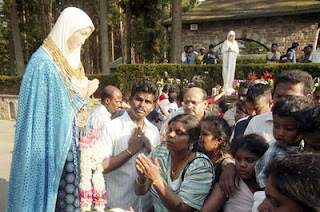
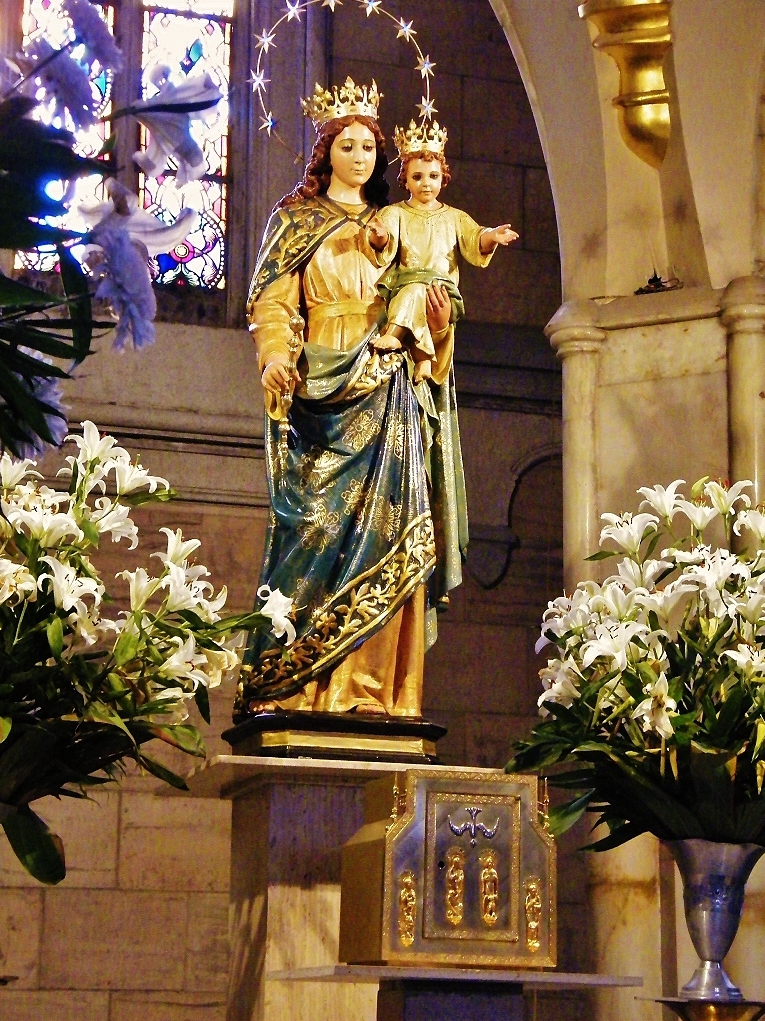
Catholics have been taught that Mary is to be honored and venerated above all women. Shrines have been built for Mary, and her image occupies the focal point of many Catholic services. Every year, millions of devout Catholics travel many miles to visit shrines of Mary, who they say is the "Mother of God." They will kiss the statue and pray in the direction of the statue of Mary and other statues of saints.

Every day Catholics say prayers to a person they consider to be their spiritual "mother." But, Mary is dead and is with God the Father and Jesus Christ in Heaven, and with all those who have left this earth to be with the Lord. Mary is not requiring your prayers to her. She is not asking for your veneration or adoration.

When Jesus Christ went to a marriage in Cana of Galilee, Mary asked Jesus if He would do a miracle for her (she mentioned that they had no wine), because she knew He could do miracles.

John 2:1-4
1 And the third day there was a marriage in Cana of Galilee; and the mother of Jesus was there:
2 And both Jesus was called, and his disciples, to the marriage.
3 And when they wanted wine, the mother of Jesus saith unto him, They have no wine.
4 Jesus saith unto her, Woman, what have I to do with thee? mine hour is not yet come.
• {1.} The Greek word for woman is guné, which also means lady. Why did Jesus Christ Himself not refer to Mary as His mother?

Returning to the statement of St. Mary's Catholic Campus Ministry: "A special action of god [sic] was then necessary to preserve Mary from it [original sin] [1]." Is there any scripture in God's Holy Bible that says Mary was "preserved" from sin, and born without sin?

Jesus Christ's Humanness: His Emotional and Physical Suffering


Jesus Christ being both God and man (at the same time) suffered from the results of man's sin, such as getting exhausted enough to sleep in a boat while it was in a storm on the Sea of Galilee (Matthew 8:24-25). His body suffered hunger (Matthew 4:2) and Satan tried to get Him to turn a stone into a loaf of bread, which Jesus Christ did not do. While Jesus was in the Garden of Gethsemane, He spoke to God the Father and requested: "Saying, Father, if thou be willing, remove this cup from me: nevertheless not my will, but thine, be done." (Luke 22:42-44).

Jesus Christ did not sin, because He is the Only Begotten Son of God (John 3:16), and is Holy. He and God the Father are one God. In John 10:30, Jesus said: "I and my Father are one." But, Jesus Christ's earthy body was not incapable of feeling the results of mankind's sin (Hebrews 4:15-16) [2]. He was affected by the limitations of a human body and by human feelings, such as partially wanting to delay going to the cross. But, He chose His Father's will over His own will.

• {2.1.} If Jesus suffered from temptations (but never sinned because He is God and chose His Father's will over His own) how could Mary, a human created by Jesus Christ (Colossians 1:13-17), be unable to sin?

• {2.2.} Romans 3:23 says: "For all have sinned, and come short of the glory of God;" Where in that verse, or anywhere else, does God's Word (The Bible) say that Mary is exempt?

Some Questions We Must Look At


Tuesday, May 23, 2017

Pokemon and the Deception of the Devil

Pokémon and the Deception of the Devil


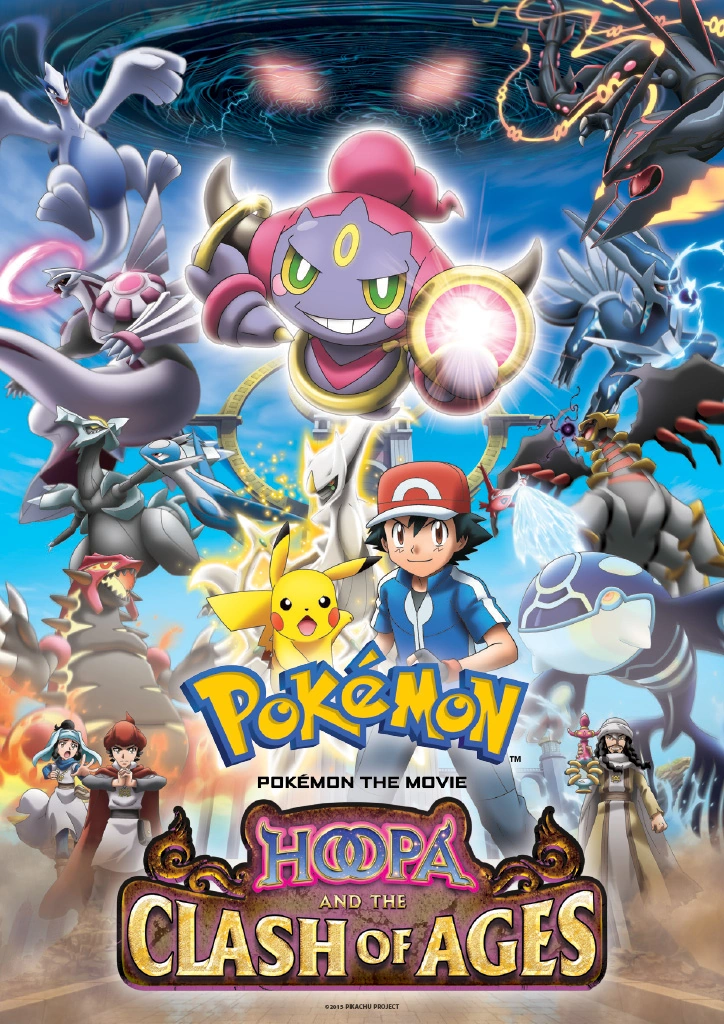
Still popular since its first appearance in 1995, the Pokemon franchise has sold hundreds of millions of video games, billions of Pokemon cards, many toys, and other merchandise. Now more than two decades old, Pokemon has a huge appeal to many people around the world. 

There must be a reason why Pokemon has an enduring popularity among adults, teens, and children. It's more than just entertainment. Here are some brief statistics:

- Over 260 million Pokemon video games have been purchased worldwide (as of 2014) [1]. 
- Over 21.5 billion Pokemon cards, in 10 languages, have been shipped to 74 countries [1]. 
- The Pokemon animated series has over 800 episodes [1].
- There are 17 Pokemon movie theater films [1].
The Pokemon Go game became very popular (within a week of its release) and had up to 28.5 million uses in the United States, at its peak, before declining [2]. 

These numbers reveal just how popular Pokemon is. But, these numbers don't reveal why Pokemon has such enthusiastic fans worldwide. First, we will look at the basic story of Pokemon, which begins with a character called "Ash Ketchum" (a pun of the slogan "Gotta catch 'em all."). 

The Basic Plot of Pokemon


Ash Ketchum (a 10 year old boy) wants to be a powerful Pokémon trainer. With his own Pokémon, "Pikachu," Ash joins some friends to help him obtain new Pokémon. At the same time, a group of rivals, called Team Rocket, and other "evil" organizations battle Ash and his friends. Members of Team Rocket want to take Pikachu for themselves. Also, throughout the series, Ash and his team compete in Pokémon championships [3]. 

This may seem "innocent," but we need to look at this closer, especially since your children might be playing with fire. Studies have shown that Pokemon and other video games and cartoon shows that portray violence have a negative effect on children [4]. Violence in TV shows, whether it is cartoon or live action violence, is harmful to adults and children, but especially children. Studies have found that violent scenes in children's cartoon shows (such as Pokemon) affect children's thoughts, behaviors, and feelings in the same way that violent TV shows do [4]. 


The Spiritual Side of Pokemon


The Pokemon cartoon series strongly promotes the Pokemon card game, which involves occultic and new age concepts and practices. For instance, in the Pokemon trading cards, there are cards with Pokemon characters that have "psychic" powers. These are "magical abilities" which allow unnatural things to happen, such as a "focus blast" to magically attack an opponent. The character focuses its mind on the enemy and "unleashes its power" [5].

One magical and occultic feature of many Pokemon trading cards is called a "hex move [6]." A hex move gives the Pokemon creature the ability to place a very harmful spell on its opponent.

Sunday, May 21, 2017

Exposing Ben 10: The Deception in Kid's Cartoons


Ben 10 and Other Kid's Cartoons Exposed

In a world of animated creatures, "epic" battles, and "sci-fi" drama, we find our kids' imaginations drawn into the surreal, make-believe world of TV cartoons. One in particular has grown to such popularity that it has existed for over a decade (12 years since 2005) and has gained fans around the world. Its franchise has gained billions of dollars in sales worldwide. This popular cartoon show airing on Cartoon Network is Ben 10.

The show is not the only popular aspect about this franchise. Ben 10 toys are very popular with many children, even breaking sales records [1]. The Ben 10 franchise gained over $4.5 billion dollars in retail sales worldwide [2].

So, why should this cartoon be concerning? If you are a parent, you need to know what your children are watching and what the TV is teaching them. If you happen to enjoy cartoon shows yourself, I ask you to stay with me and take a few minutes to read the article below. Cartoons and TV shows do affect what we believe about the world in which we live, and what we consider to be morally right or wrong.

In the Ben 10 universe and in other cartoon shows (such as Dragon Ball Z, Yu-Gi-Oh, and Pokemon), aliens, magic powers, spells, shape-shifting, levitation, astral projection, channeling power, clairvoyance, telepathy, talismans, and magic amulets are promoted and used to drive the plots forward. All these items are themes and objects found in books on the occult and sorcery that real witches and warlocks claim to work with.

In the Ben 10 universe, Ben Tennyson, the "hero," has a special band (the "Omnitrix") attacked to his arm which gives him special powers to shape-shift or morph into alien entities of various types.

The basic plot of Ben 10


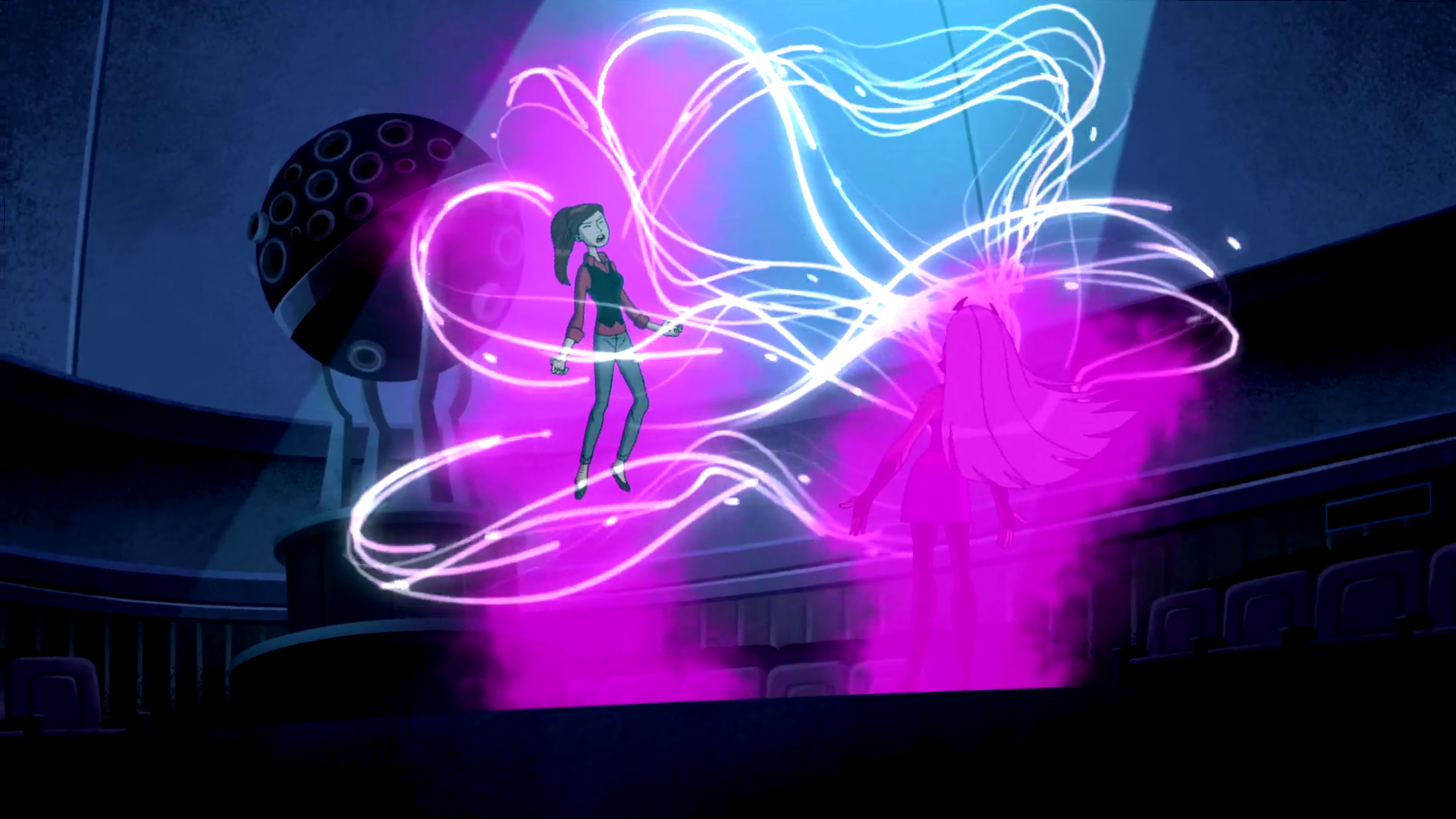
At age 10, Ben Tennyson and his cousin Gwen (age 10) go on a summer camping trip with their Grandpa Max Tennyson. In a grove of trees, Ben finds a strange capsule and a watch-like device, called the Omnitrix. To his surprise, it attaches itself to his wrist somehow. This magical device happens to belong to alien entities. One alien entity in particular, called Vilgax, wants to take this device for himself. He is the main villain in this cartoon. Ben finds that his Omnitrix arm band can trans-morph (or shape-shift) him into various alien creatures. With these magical powers, Ben fights against "evil" aliens and evil people [3].

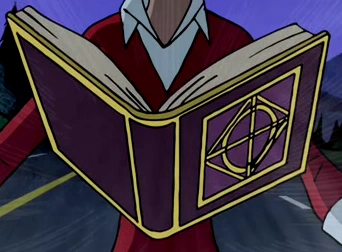
His cousin Gwen has access to a magic spell book and uses magical powers and spells throughout the Ben 10 seasons. Gwen stole this magic spell book from a character called "Charmcaster."

Looking at Ben 10 through the lens of Scripture


Saturday, May 20, 2017

Is it wrong for Christians to watch anime or cartoons with magic powers?

Is it wrong for Christians to watch anime or cartoons with magic powers?

Some Christians online have wondered if it is wrong to see cartoons with magic powers or anime cartoons that demonstrate magic powers or supernatural powers. 

The authority or foundation of all that is true and right is the Bible, God's holy Word, that He gave to man by inspiration of God's Spirit.

The Bible has the solid structure for all that we know to be right. It is the foundation on which a Christian should build his or her life (Matthew 7:24-27). It is our instruction book and source of understanding what is right and what is wrong. Psalm 138:2 says, in part, that God "... hast magnified thy word above all thy name." Psalm 12:7 says of God's words: "Thou shalt keep them, O Lord, thou shalt preserve them from this generation for ever." God preserves His Word, the Bible, forever.

So, is it wrong for a Christian to see supernatural powers demonstrated in cartoons (or other forms of entertainment, such as comic books, movies, video games, etc.)? 

2 Corinthians 6:14 says: "Be ye not unequally yoked together with unbelievers: for what fellowship hath righteousness with unrighteousness? and what communion hath light with darkness?"

The Bible says in 2 Corinthians 6 that Christians are to not be unequally yoked together with unbelievers. This is another way of saying that we must not be in agreement with the ways of the world. A yoke of oxen (two oxen) plowed a field together in ancient times. They were in agreement, in other words. Communion, fellowship, closeness, intimacy, working together, or playing with the world's ways is not the lifestyle that God has for His people.  

2 Corinthians 6:14-17

"14 Be ye not unequally yoked together with unbelievers: for what fellowship hath righteousness with unrighteousness? and what communion hath light with darkness?

15 And what concord hath Christ with Belial? or what part hath he that believeth with an infidel?

16 And what agreement hath the temple of God with idols? for ye are the temple of the living God; as God hath said, I will dwell in them, and walk in them; and I will be their God, and they shall be my people.

17 Wherefore come out from among them, and be ye separate, saith the Lord, and touch not the unclean thing; and I will receive you."

(A demonic character from the Ben 10 cartoon.)
God is saying in verse 16 that we, who are temples of God's Holy Spirit, must not have idols. We must forsake idols and the ways of the world. God desires to have intimate, close fellowship with us, His children (1 Corinthians 1:9, 1 John 1:5-7, Jeremiah 31:3).

Monday, October 19, 2015

Getting Set Free from Lies and Deceptions with Romans 10:9-10


Getting Set Free from Lies and Deceptions with Romans 10:9-10


Romans 10:9-10
9 That if thou shalt confess with thy mouth the Lord Jesus, and shalt believe in thine heart that God hath raised him from the dead, thou shalt be saved.
10 For with the heart man believeth unto righteousness; and with the mouth confession is made unto salvation.

The Book of Romans chapter 10, (verses 9 and 10) tell us that if you confess the Lord Jesus Christ (making Him your Lord and Savior) and believe in your heart God (the Father) has raised Him from the dead, you will be saved (from your sins and from Hell, the punishment on those who refuse to repent and refuse to turn to God). 

God put on my heart and showed me another application of Romans 10:9-10. It says, “That if thou shalt confess with thy mouth the Lord Jesus, and shalt believe in thine heart that God hath raised him from the dead, thou shalt be saved.” (Romans 10:9). If we confess aloud with our mouth what God’s Word says (such as a scripture verse) and believe it in our heart, this helps to set us free from lies. For instance, if you believe a lie that God does not truly care for you, tell God about it, and you can say something like, “Dear Father God, I give this lie to you. It is a lie and it is not true.” Then, read a scripture verse or part of the verse aloud that contradicts that lie. For instance, you could read aloud:

Isaiah 40:10-11
10 Behold, the Lord God will come with strong hand, and his arm shall rule for him: behold, his reward is with him, and his work before him.
11 He shall feed his flock like a shepherd: he shall gather the lambs with his arm, and carry them in his bosom, and shall gently lead those that are with young.

After reading this (or part of it) aloud, you could then say something like: “Dear Father, you are my shepherd. You love me and you are carrying me in your arms. It is a lie that you do not truly care for me. You love me. Thank you for your love and care for me.” Even if you do not feel the emotions, doing this will free you up and help you to combat the lie with the truth and be set free from the enemy and his lies. Making use of God’s Word is taking the Sword of the Spirit out of its sheath and using it to fight the enemy (see Ephesians 6 and Hebrews 4:12).

GOD spoke this word to me to write down on 10/18/15. I tested this with the test of the spirits found in 1 John 4:1-4. The following words in quotes are God’s words:

"Romans 10:9 and 10 is indeed speaking of the need to confess with your mouth that I am the LORD and it does indeed apply to the application I have shown you; confess with your mouth that I am the LORD, and also confess the truth with your mouth that you find in My Word, and believe it in your heart, and you certainly shall be saved from the lie, and you certainly shall be delivered, and I shall raise you up from all the lies, and you shall believe the truth. These are My words and I the LORD your God have spoken.”

_________________

Hebrews 4:12

12 For the word of God is quick, and powerful, and sharper than any twoedged sword, piercing even to the dividing asunder of soul and spirit, and of the joints and marrow, and is a discerner of the thoughts and intents of the heart.

Ephesians 6:16-18 (read all of Ephesians 6)

16 Above all, taking the shield of faith, wherewith ye shall be able to quench all the fiery darts of the wicked.

17 And take the helmet of salvation, and the sword of the Spirit, which is the word of God:


18 Praying always with all prayer and supplication in the Spirit, and watching thereunto with all perseverance and supplication for all saints;