The Marriage Supper Parable - A Cartoon with Sound Effects, Music, and Scripture - A Teaching of Jesus in Matthew 22

(See the PDF file here: https://drive.google.com/file/d/1-l2aOUz80mv-LIyzzPpySegRgZDMaDLT/view?usp=sharing .) The Marriage...

Wednesday, August 2, 2017

The Dreamer Dreamed - (A Story that Contains Prophetic Words from God) (Part 2) - Rejection -


The Dreamer Dreamed - The Visions of Judgment 
(A Story that Contains Prophetic Words from God) (Part 2)

(Click here to open a safe website that reads text for free. 
You can copy and paste this post to have this story read aloud.)


This is a short story about a young man named Steven who was given dreams from God that reveal truth God has shown me (the writer) that His Church needs to hear. Though this is written as fiction, the words spoken by Jesus are actual words that God showed me. So, this is not just a fictional work. It applies to our current world and to the Church. I encourage you to seek God about this to find out what He would show you about this story.


(Click to See Parts: 1, 3, 5, 7, 9, 11, 13, 15, 17.
Click here for the Table of Contents.)

Chapter 2


The Church That Ignored Their Savior

That night, Steve dreamed again. He found himself standing in the same hallway with the bulkhead doors on either side. The same ceiling light bulbs hummed in their steel cages. Now, as Steve began walking down this hallway, he wondered why it felt very familiar. He had forgotten his previous dream. He tried a door to his left and the handle moved. It was unlocked. Curious, Steve opened it and peered inside.

He found himself staring into a church building sanctuary. At the back of the large room stood a raised platform with a pulpit. A man was standing behind the pulpit and speaking to a large congregation of people. The people in the congregation were reading their Bibles, but were oblivious to Steve as he started walking down one of the four aisles. Then, Steve noticed a man in the front of the room, before the steps leading up to the platform. He was lying on the ground and clearly appeared to be in pain. He had a beard and hair that went down to just above his shoulder. He wore an off-white robe and sandals, like someone from ancient Israel or the Middle East might have worn.

Steve approached the man and was struck by how much agony and sadness he wore on his face and by the love and grief that appeared in his eyes. His side was bleeding, and nail scars in his hands gushed out blood, but no one paid any attention to him. The pastor should have been able to see him, but he completely ignored him and continued preaching. Then, it occurred to Steve that this man was Jesus. Running to his side, Steve said, “Lord Jesus, what has happened to you? Why are you bleeding?”

Just as Jesus was about to speak, a firm hand grabbed Steve around his wrist and pulled him away. Another hand seized his other wrist and some strong men led Steve away from the front end, and down an aisle toward an exit. They opened a door to a small room, pulling Steve in, and shut the door behind them.

“Why did you take me away? Why aren’t you helping that poor man?” Steve asked, shocked at their treatment of him.

One of the men frowned at him and said: “You were disrupting our service and we cannot permit that behavior in our church.”

“But, there is a man bleeding to death right before you, and you act like you never noticed him.”

“What man are you talking about?” the other man said.

“There is a man with blood coming from His hands and side. He, He is Jesus. Why hasn’t anyone noticed Him?” Steve said, with tears starting to run down his face. He wiped them away.

“We don’t know what you’re talking about. You’re hallucinating or something.”

“Let’s get him out of here. He must be drunk,” the other man said reaching to grab Steve’s arm. The men shoved Steve through a door, and he suddenly found himself in another location.  

____________________


He was in a manicured garden with marble walkways, streams, and beautiful, flowering trees. A hand touched his back and gently rubbed him. Looking up, Steve smiled. It was Jesus.

His green eyes looked down at Steve with great love and warmth. Brown hair flowed down to just a couple inches above his shoulders. His skin was of an olive complexion. A white or off-white garment reached down to his ankles where leather sandals kept his feet from touching the path. He wore a golden belt or girdle. Steve was six feet tall, but Jesus appeared to be at least seven feet in height.

“It’s you, dear Jesus,” Steve said, amazed.

“It is I. Be not afraid,” He said warmly.

“I saw you back in that church building. Why were you lying in a pool of blood, and why did no one notice you?”

Tuesday, August 1, 2017

The Dreamer Dreamed - (A Story that Contains Prophetic Words from God) (Part 1) - Steve's Dream -


The Dreamer Dreamed - 
The Visions of Judgment 

(A Story that Contains Prophetic Words from God) (Part 1)

(Click here to open a safe website that reads text for free. 
You can copy and paste this post to have this story read aloud.)


Chapter 1

This is a short story about a young man named Steven who was given dreams from God that reveal truth God has shown me (the writer) that His Church needs to hear. Though this is written as fiction, the words spoken by Jesus are actual words that God showed me. So, this is not just a fictional work. It applies to our current world and to the Church. I encourage you to seek God about this to find out what He would show you about this story.


(Click to See Parts: 1, 3, 5, 7, 9, 11, 13, 15, 17.
Click here for the Table of Contents.)


Steve, a young man in his early twenties, pulled his blankets over him as he lay in bed. The dim light from a bare light bulb shot through a gap between his basement bedroom door and the concrete floor. His breathing slowed to a restful state and a dream began to form in his mind. An underground base with steel and concrete hallways appeared.

Steve was standing in a steel hallway lined with metal doors that resembled the bulkhead doors in a ship. A lip was raised a couple inches from the floor of each door and all were closed tight. Electric light bulbs, encased in metal cages, hummed and flickered along the hallway. Footsteps were approaching from behind Steve. Turning quickly, he saw a man approaching, carrying a briefcase in his left hand and a pen in the other. The man wore dark sunglasses, a black trench coat, and a black suit.

“You want your God to love you?” he asked Steve.

That was a strange question, Steve thought. Who was this guy?

“I know you do. So, would you like to find out how to get your God to love you more? Would you like Him to satisfy your desires?”

Steve had felt somewhat empty and somewhat distant from God, and he couldn’t tell exactly why he felt that way, but he did. He had been raised as a Christian and had received Jesus as his Savior and Lord when he was a boy. What this stranger was saying was unusual, but the questions strangely drew him to want to know more.

“Yes,” Steve said. “How?”

“I will give you a booklet which will help you to get God to satisfy your desires.”

The stranger pulled out of his briefcase a booklet and handed it to Steve. Taking it in his hands, he felt the pages and the laminated texture. It looked like a small manual. Opening it, Steve perused through the pages.

“How can I trust you?” Steve asked.

“I am a man of my word. I have served your God for many years and He wants you to follow my, I mean, this booklet.”

“But, this isn’t the Bible,” Steve said. “Why should I follow it?”

“Just trust me. You will see as you follow it.”
Steve began to flip through the pages. He didn’t notice footsteps walking away until he heard the sound of a metal door squeak shut.

The stranger had just opened one of the bulkhead doors, and shut it softly behind him, but he had left it cracked ajar as if to invite Steve to follow him. Steve glanced through the booklet and noticed that it seemed very logical and rational. It made sense. This booklet told him the way to have peace, and a sense of well-being, and confidence by way of taking upon oneself to do tasks and assignments. One was praying for everything he could think of, including praying for long periods of time. It included repetitive prayers and praying for everything with meticulous detail and precision.

Another point made by this booklet was to read three chapters of the Bible quickly and with the goal of getting the chapters done within a certain time frame. Also it spoke of community service, such as raking leaves for widows and picking up trash. The goal in mind for these works is to obtain favor and blessings from God and to earn more of God’s love. This sounded good to Steve, but a still, small voice whispered, “Trust Me and don’t trust these works.” But, Steve felt strongly in his heart that he should do these good works to earn favor and blessing. “How else could I feel God’s love?” Steve thought.

He was curious what lay beyond the door. Stepping over to the door, he nudged it with his hand and it felt very cold, but he pushed it open, and it squeaked loudly. Steve cringed at the sound, but curiosity got the better of him, and he stepped through the door, over the rim. Inside, he found himself in a long hallway with a warped floor. Troughs, bumps, and craters distorted the metal surface underneath. As Steve began walking forward, he noticed the hall widening and widening as if it was from an optical illusion. Here and there were people who were staring at hand mirrors and adjusting their hair. On their shirts hung medals and ribbons. But, each ribbon or medal had a distinct quality about it that drew Steve’s curiosity. The ribbons appeared to be made of paper, and the “medals” of shiny plastic.

“Excuse me, young man,” a gentleman with muttonchops and a red military uniform called out.

“Yes?” Steve said.

“Where do you come from?” The gentlemen studied him with piercing eyes that hid under bushy eyebrows.

“I come from Everytown: population thirty-five thousand.”

“I wondered if you had heard of my name, from where you came?” the man asked.

“No, who are you?”

“I am Colonel Chesterton Pride, and surely you must be aware of all the acts of service I did for your community.”

Steve squinted, trying to remember if he had met or heard of the colonel before.
Colonel Pride said with gusto: “I built an orphanage, gave thousands of dollars to widows and the poor. I regularly attended the First Church of Everytown until I moved to Anytown. Not to be proud, but when I was asked to help the pastor fix the roof of the church building, I ignored my back pain and put my skills to use. Some of the other men had to leave early, but not me. I worked until the sun went down, when my eyes couldn’t see the shingles before me. The next day, I gave a widow the best of my wife’s old clothes and I repaired her kitchen sink. I could go on and on about my accomplishments, but I don’t wish to bore you. So, what brings you here?”

“Where are we?” Steve asked, taking in what colonel had said.

Friday, July 14, 2017

Expounding the Trumpet and Vial Judgments in the Book of Revelation (PART 2 of 2)


Expounding the Trumpet and Vial Judgments in the Book of Revelation (Part 2 of 2) [Print Document]

In the first part, we looked at the seven trumpet judgments and expounded on them a little. We saw how devastating they will be to the wicked, who will not repent from their sins during the seven-year tribulation. Now, we will look at an overview of the vial judgments, which are seven stages of the seventh trumpet judgment, and we will expound on these a little.

An Overview of the 7 Vial Judgments

The 1st vial — (Revelation 16:2) “And the first went, and poured out his vial upon the earth; and there fell a noisome and grievous sore upon the men which had the mark of the beast, and upon them which worshipped his image.”

Noisome means “hurtful” and “destructive”, according to Webster’s 1828 dictionary. According to this dictionary, grievous means: “2. Afflictive; painful...” [and] “3. Causing grief or sorrow.” This noisome and grievous sore is a very hurtful and destructive disease that these wicked people will be struck with. Sores will likely rise all over their bodies. They will last for a long time (See the fifth vial).

The 2nd Vial — (Revelation 16:3) “And the second angel poured out his vial upon the sea; and it became as the blood of a dead man: and every living soul died in the sea.”

Map of red oceans
The second vial and the second trumpet are similar, but the second vial causes all the animals in the sea that have a soul (but not a spirit) to die. All the world’s oceans will become as blood. The second trumpet caused just a third of all the ocean to become blood. Now, the judgment is stronger than ever because the people’s hearts are more hardened than ever. This will devastate the world’s economy.

The 3rd  Vial — (Revelation 16:4-6) “[4] And the third angel poured out his vial upon the rivers and fountains of waters; and they became blood. [5] And I heard the angel of the waters say, Thou art righteous, O Lord, which art, and wast, and shalt be, because thou hast judged thus. [6] For they have shed the blood of saints and prophets, and thou hast given them blood to drink; for they are worthy.”

(The Yangtze river became red on Sept. 11, 2012.
This is a sign of when rivers will be filled with blood.)
The third trumpet judgment saw a third of rivers, streams, and springs becoming poisonous. But, the third vial causes almost all of the rivers and fountains of water to become blood. The reason we know that not all of these water sources are turned to blood is that God’s people will be in wilderness locations where God will provide for them (Revelation 12).

Expounding the Trumpet and Vial Judgments in the Book of Revelation (PART 1 of 2)


Expounding the Trumpet and Vial Judgments in the Book of Revelation (Part 1 of 2) [Print Document]
Revelation 10:7
“[7] But in the days of the voice of the seventh angel, when he shall begin to sound, the mystery of God should be finished, as he hath declared to his servants the prophets.”
God was putting on my heart to write an article about Revelation 10:7. This article will look at the deeper meaning behind the verse and how it applies to the world today and in the future. Let’s look at the last part of Revelation 10:7: “... the mystery of God should be finished, as he hath declared to his servants the prophets.” When the seventh angel has sounded his trumpet, the prophecy of the future and of judgments on the earth shall be fulfilled.
In Revelation 8-9, we read about six trumpets that are sounded by six angels. The seventh angel blows his trumpet in Revelation 11. These trumpets announce sequential judgments that literally shall fall upon the earth and shall affect billions of people. Some Christians think these judgments are figurative or allegorical, but we must go according to God’s Word and the Spirit of God, and not man’s opinions. I encourage you to seek God for yourselves to see if what I am writing here is of God. (See Jeremiah 33:3 and John 16:13.).
An Overview of the Trumpet Judgments
Let’s look at an overview of the trumpet judgments in Revelation 8-9.
A grass fire
The 1st trumpet — Hail and fire, mingled with blood, are cast upon the earth. All the green grass is burnt up and one third of the trees are burnt up. The blood is literal blood. It is the blood of those who were martyred for their
large hailstones
faith in Jesus and in God’s Word. (God showed me this. You may seek God about this.). In Revelation 16:4-7, the rivers and fountains of water are turned to blood. It is revealed why this will happen. Revelation 16:6 says: “For they have shed the blood of saints and prophets, and thou hast given them blood to drink; for they are worthy.” For the same reason, this blood is poured upon the wicked as judgment for the shedding of innocent blood and for shedding the blood of the martyrs.
The 2nd trumpet — A giant asteroid falls into the sea and a third of all fish and other sea creatures are killed. And, a third of the sea becomes blood. That means, a third of all the ocean is blood. A third of the ships are destroyed. This judgment will devastate the world economy. Many countries depend on the sea for transportation and food. The blood-filled sea would make transportation slower and more costly. Also, without a third of the fish, the food supply would be significantly harmed.
an asteroid

The Marine Stewardship Council said on their website some interesting facts about the consumption of fish:

“In 2013, fish accounted for about 17% of the global population's intake of animal protein.”
“In 2013, fish provided 3.1 billion people with almost 20% of their intake of animal protein.”
“In some countries, fish accounts for more than 25% of animal protein intake.”
The 3rd trumpet — The star wormwood is an asteroid that is filled with a very bitter and poisonous substance. This asteroid breaks apart in the atmosphere and the pieces land in many areas to make the water bitter and poisonous (i.e. it kills men who drink it). The pieces land in a third of the rivers and upon the fountains of water (i.e. streams and springs) around the world.

Tuesday, July 11, 2017

THE KINGDOM OF ROME AND THE ANTICHRIST, THE FOURTH KINGDOM (Ancient Rome) (Vatican) (Prophecy) (Pope Francis) (New World Order) (Caesar) (Fall of Rome) (Roman Empire) (Final Pope)


The Kingdom of Rome and the Antichrist, the Fourth Kingdom [Print Document]

(Note: For opening links, I recommend you right click on links, and then select "Open link in new tab". If you just click on the link with the left mouse button, it will take you to away from this site. All these links open to safe websites, such as Wikipedia.org and Archive.org.)


The Roman Empire was the most powerful empire of the ancient empires. It controlled vast amounts of territory around the Mediterranean Sea. Its roads, many buildings, and aqueducts still exist today, revealing how well-designed they were. But, Rome's legacy never ended. In this article, we will show how Rome never truly ceased to exist as a powerful, multicultural, and geopolitical empire. We will show how the Roman Empire is alive and well in a form that one may not expect.

Daniel 7:7-8
“[7] After this I saw in the night visions, and behold a fourth beast, dreadful and terrible, and strong exceedingly; and it had great iron teeth: it devoured and brake in pieces, and stamped the residue with the feet of it: and it was diverse from all the beasts that were before it; and it had ten horns. [8] I considered the horns, and, behold, there came up among them another little horn, before whom there were three of the first horns plucked up by the roots: and, behold, in this horn were eyes like the eyes of man, and a mouth speaking great things.”


The kingdom or Empire to succeed the Greek kingdoms was Rome. After years of fighting on and off with Greece, Rome was able to conquer the Greek city-states, which were not always friendly with each other. Rome spread its control around the Mediterranean Sea and all the way up to Britain. But, the European tribes did not like their conquerors. Later, when Rome was weakened and slowly collapsing, disgruntled Germanic tribes (Goths and others) attacked Italy. The western Roman empire eventually was divided up into small countries or regions controlled by Germanic tribes, including the Franks, Goths, Visigoths, Vandals, and others. But, many of these tribes adopted some of the culture and customs of the Romans.


Diocletian Divides the Empire


(Diocletian divided the empire.)
A couple centuries earlier, when the empire became somewhat weakened and it could not effectively control its vast territories, the emperor Diocletian divided it in two (in 284-285 A.D.), fulfilling the prophecy in Daniel 2. In Daniel 2, King Nebuchadnezzar has a dream about a statue, symbolizing major empires that existed through history during Daniel’s time and afterward. It reveals that the Roman Empire, the legs of iron, would be divided into two realms.  These are represented by the two legs of the statue in Nebuchadnezzar’s dream.


A statue from Daniel 2Daniel 2:33 says: “His legs of iron, his feet part of iron and part of clay.”
Daniel 2:40 says: “And the fourth kingdom shall be strong as iron: forasmuch as iron breaketh in pieces and subdueth all things: and as iron that breaketh all these, shall it break in pieces and bruise.”


After Diocletian divided the empire, the western Roman empire continued to struggle with moral, economic, and social issues, and its administrative power eventually collapsed under the weight of its own corruption. The Apennine Peninsula was captured by Germanic tribes who divided up the land into weak kingdoms. However, Charlemagne, the king of the Franks, became the first “Holy Roman Emperor.” Pope Leo III announced, in 800 A.D., that Charlemagne was the Western Roman Emperor or the Emperor of the Romans. So, in actuality, Rome did not end at this time. Its administrative grip over the land was transferred to the political and religious influence of the Roman Catholic Church, and to the weak Holy Roman Empire.


(A map of a divided Roman Empire)
Rome Continues to Exist


Meanwhile, the eastern Roman empire, called the Byzantine Empire, lasted for centuries until it was conquered by the Ottoman Turks. During this time, while the Holy Roman Empire existed, the main power in Europe was the influential power of the Catholic Church, which influenced the way people lived and the politics of their countries. This organization claimed to get its origin from the 12 apostles, whom Jesus Christ appointed. But, its origin is found in the religions of Egypt and Greece, which got their beliefs from Babylon thousands of years ago, around the time that all the tribes of the world were located in the Middle East when it was more fertile. (Note: I write this article not to attack Catholics but because I care about them, and want to point out some historical facts to challenge readers. I present this information to encourage readers to think for themselves about this subject, and to seek God about it.)


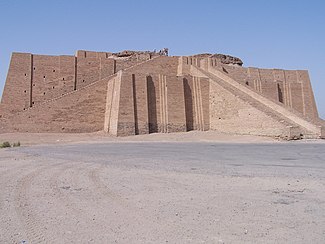
(A ziggurat)
(A ziggurat) 
In Genesis 11, the Bible tells us how Nimrod and the people in his area built a city and a great tower. This tower of Babel was being constructed by people who all spoke the same language. But, when God saw how they wanted to corrupt themselves with idolatry and with a desire to become like God, He changed their languages so that they spoke different languages. These languages are the parent languages of the modern ones that exist today.


The Egyptians brought from that early culture ideas about a goddess with a child that they worshiped as Isis and Horus. In the Middle East many people of different ethnic groups worshiped Ashtoreth (or Astarte, Ishtar), a goddess of “love,” fertility, the moon, and other attributes, including being the supposed “mother” or “creatress” of mankind (Reference “Ashtoreth”). She was worshiped in connection with Baal.


The Catholic Church took the concept of a motherly goddess and paired that concept with a child god to form their version of Mary with her son. This baby is by no means Jesus. This baby would be the son of the goddess, which pagans from many cultures would be familiar with.


The pagan Romans did not actually worship a mother goddess with her child in the exact way that Catholics do, but the Egyptians did, and the Greeks had the concept of a powerful mother goddess from ancient times. Long before the cult of Zeus was accepted by ancient Greeks, they worshiped a goddess called Hera (Sidwell), a so-called “great goddess,” or a “mother goddess.” Much later, when they adopted the cult of Zeus, the Greeks made Hera into a wife of Zeus, and no longer worshiped her as a great “mother goddess.”


An article by Robert T. Sidwell details how Hera was worshiped as a powerful goddess before the cult of Zeus emerged in Greece. He wrote:


“Hera, however, was originally connected to an older matrifocal world far more ancient than the cult of Zeus in Greece-a world in which she held a powerful and important status in her own right.” [End quote] (Sidwell).


Early Catholics adopted the concept of a mother goddess for their religion by taking pagan teachings from other religions and bringing them together into many of the doctrines of the Catholic Church. They modified the scriptures or twisted them to suit their pagan beliefs. For instance, Catholics often pray to a statue or a picture of Mary with a halo over her head. The halo can be found in pre-Christian artwork, such as a Roman floor mosaic of Apollo with a halo about his head (right). There are many examples of halos found on ancient vases prior to the time of Catholicism.


Pagan festivals and gods were assigned different names and incorporated into the Catholic Church. Easter is an example. Nowhere in the Bible does it teach that Christians should keep Easter. The Easter egg is not found in the Bible. It comes from pagan festivals. The Encyclopedia Britannica (1991) mentioned that:  “...folk customs have collected, many of which have been handed down from the ancient ceremonial…symbolism of European and Middle Eastern pagan spring festivals…for example, eggs…have been very prominent as symbols of new life and resurrection”[.]  

The Catholic Church Is the Incarnation
of Its Predecessor, the Roman Empire.


Thursday, July 6, 2017

Matthew 5:5 Expounded — “Blessed are the meek: for they shall inherit the earth.”


Matthew 5:5 Expounded — “Blessed are the meek: for they shall inherit the earth.”
[Print Document]


God the Father shows us in His Word the blessings of following Him and obeying Him. If we humbly depend on Him, we will be meek, and those who are meek shall inherit the earth. The Greek word for meek is praus. It includes meek and humble in its definition.


But, what does being meek look like? Let’s look at what a 19th century English dictionary has to say about this word. In the 1828 Webster’s dictionary, meek is, in part, defined as: “1. … gentle; not easily provoked or irritated; yielding; given to forbearance under injuries. ...” [and] “2. …  humble, in an evangelical sense; submissive to the divine will; not proud, self-sufficient or refractory [i.e. rebellious] ; not … apt to complain of divine dispensations. …” (See the footnote below).


Being Meek Means Not Being Easily Provoked


A meek person is not easily provoked or irritated with what people do or say, or with circumstances. He (or she) yields to God’s Word, which says in Matthew 5:3: “Blessed are the poor in spirit: for theirs is the kingdom of heaven.” Being poor in spirit includes being lowly in spirit. The Greek word for poor is ptóchos and it includes lowly in its definition. When someone does something hurtful to us, we can either hold a grudge or forgive them. Forgiving an offense is humbling, but it is also the right thing to do. If we don’t forgive people, God could not forgive us (Matthew 18:21-35) because the heart that does not forgive — it dies to God (Romans 6:23). This is a serious thing to consider.


I used to have grudges against people, but I learned from reading God’s Word the blessings of forgiving and also the necessity of forgiving all people all their wrongdoings against me and against others. This actually lifted a burden that I had on my chest. It is bondage to be bitter, but it is freeing to forgive. That is something I believe God showed me. Bitterness actually gives the enemy access to harm one’s body physically. According to the Mayo Clinic, bitterness brings, or can bring, with it higher blood pressure; decreased heart health; a weakening of the immune system; anxiety; hostility; and stress (Mayo Clinic).  


____________________
Footnote:


[Refractory, according to this same dictionary, means: “...obstinate in non-compliance...” Dispensation is defined by this dictionary as: “4. That which is dispensed or bestowed…”]
____________________


We ought to forgive others because, after all, God forgave us our sins (if we trusted in Jesus Christ for salvation). Being meek is a blessing because forgiving people helps bring healing to the soul.


Self-Sufficiency Is Not Being Meek

Friday, June 30, 2017

Expounding 2 Timothy 3:8-9 — False Teachers Exposed


Expounding 2 Timothy 3:8-9 — False Teachers Exposed [Print Document]

2 Timothy 3:8-9
“[8] Now as Jannes and Jambres withstood Moses, so do these also resist the truth: men of corrupt minds, reprobate concerning the faith. [9] But they shall proceed no further: for their folly shall be manifest unto all men, as theirs also was.”

In this article we are going to expound and discuss 2 Timothy 3:8-9. We will look at how the sorcerers of Egypt, who withstood Moses, are no different than false teachers who resist the truth. We shall see how God will have to deal with them and with those who follow them.


Jannes and Jambres

Let’s start with Jannes and Jambres, two of the sorcerers in Pharaoh’s court. (Note: The Old Testament doesn’t mention them by name, but the Jews knew who they were.)

Exodus 7:10-12
“[10] And Moses and Aaron went in unto Pharaoh, and they did so as the LORD had commanded: and Aaron cast down his rod before Pharaoh, and before his servants, and it became a serpent. [11] Then Pharaoh also called the wise men and the sorcerers: now the magicians of Egypt, they also did in like manner with their enchantments. [12] For they cast down every man his rod, and they became serpents: but Aaron's rod swallowed up their rods.”

These sorcerers decided to copy what God did through Moses and Aaron. But, God’s ways are higher than the devil’s, and the serpents of the sorcerers were eaten by the serpent that God had made from a stick. Jannes and Jambres were among these sorcerers and they used satanic power to mimic God. But, God showed His power is greater than the devil by having the serpent eat up the other serpents.

The devil and his servants mimic God, but they distort the truth. They hold a Bible in their hands and teach from it, but they twist the scripture to fit into their own unbiblical and ungodly belief system. They say, “God bless you” with their mouths, but they do not truly care about your soul or where you will end up after you die. They look good on the outside, but they are full of iniquity on the inside, in their hearts. Jesus said this about such people:

Matthew 23:27
“[27] Woe unto you, scribes and Pharisees, hypocrites! for ye are like unto whited sepulchres, which indeed appear beautiful outward, but are within full of dead men's bones, and of all uncleanness. [28] Even so ye also outwardly appear righteous unto men, but within ye are full of hypocrisy and iniquity.”